

Look, I’ll be straight with you.
The Aberdare Range is one of those places most travellers skip because they’ve never heard of it.
And that’s exactly why you need to go.
While everyone’s queuing up for the same tourist spots, we’ve been taking adventurers to this high-altitude paradise for years.
Hundreds of five-star reviews later, one thing’s clear: people who visit the Aberdares wish they’d done it sooner.
So let me show you why this mountain range deserves the top spot on your Kenya adventure list.
A High-Altitude Haven: Overview of the Aberdare Range
Here’s what nobody tells you about the Aberdares.
It’s not just a mountain range.
It’s an entire ecosystem sitting between 2,000m and 4,001m above sea level.
The Aberdare National Park stretches across moorlands, bamboo forests, and alpine zones that look like they belong in a fantasy film.
Kenya’s tallest waterfalls? They’re here.
Peaks that’ll test your lungs? Got those too.
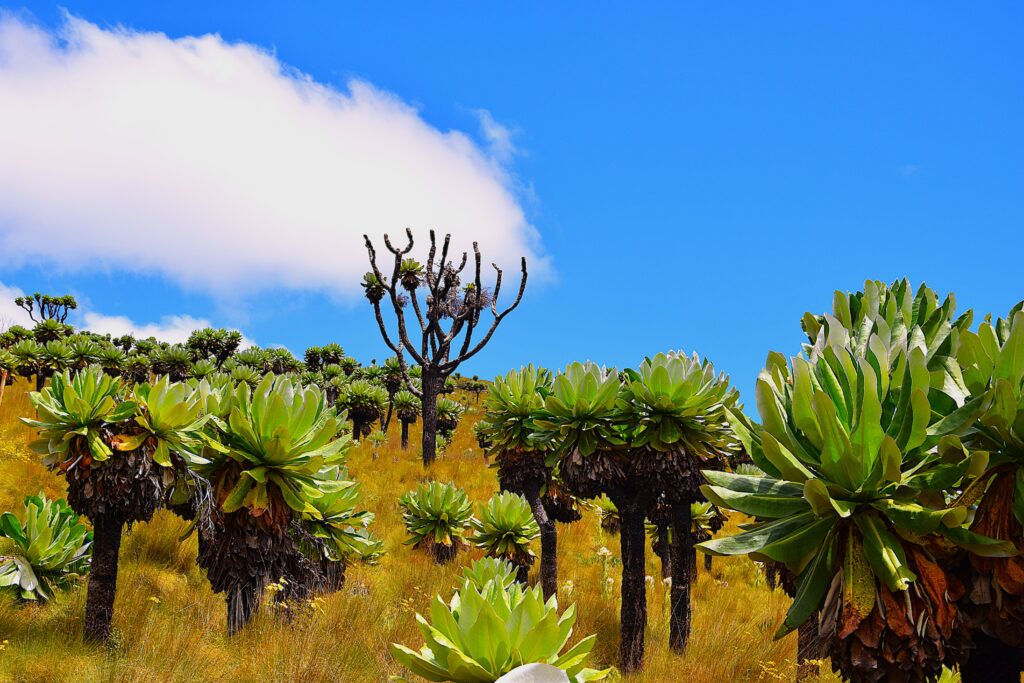
Wildlife roaming freely through ancient forests? Everywhere.
And here’s the kicker: it’s less crowded than Mount Kenya, but just as spectacular.
What makes the Aberdare mountain range special:
- Home to Kenya’s highest waterfalls (Karuru at 273m)
- Peaks reaching 4,001m at Ol Donyo Le Satima
- Over 250 bird species recorded
- Protected by electric fencing for wildlife conservation
- Critical water catchment area for central Kenya
- Year-round hiking opportunities
The Aberdare ranges sit about 100km north of Nairobi.
Close enough for a weekend escape.
Remote enough to feel like you’ve left civilisation behind.
Most of our clients at Daring Escapes come to Kenya thinking they’ll just do safari and beach.
Then they see photos of the Aberdares.
Plans change fast.
The Giant Peaks: From Satima to Kinangop
Let’s talk about the mountains that’ll make your Instagram followers jealous.
The Aberdare peaks aren’t your typical “snap a photo at the top” kind of climbs.
These are proper hiking challenges.
Main peaks in the Aberdare Range:
- Ol Donyo Le Satima – 4,001m (highest point)
- Mount Kinangop – 3,906m
- Elephant Hill – 3,906m (hardest trek)
- Rurimeria Hill – alpine beauty
- Dragon’s Teeth – unique rock formations
- Table Mountains – stunning Mt Kenya views
Each peak has its own personality.
Kinangop gives you sweeping views of the Rift Valley.
Elephant Hill tests your endurance through thick bamboo forests.
The Table Mountains offer the best vantage point to see Mount Kenya looming in the distance.
But here’s where it gets interesting.
Ol Donyo Le Satima: Reaching the 4,001m Summit
Ol Donyo Le Satima translates to “Mountain of the Young Bull” in Maasai.
And trust me, you’ll feel like a bull after conquering this beast.
At 4,001 metres, it’s the fourth-highest mountain in Kenya.
The summit sits in proper alpine moorland territory.
Think tussock grass, giant lobelias, and air so thin you’ll notice every breath.
What to expect on the Satima hike:
- Distance: Approximately 17-20km round trip
- Duration: 8-10 hours (full day)
- Terrain: Bamboo forest → moorland → alpine zone
- Difficulty: Moderate to challenging
- Best season: June to September (dry months)
The climb starts in dense bamboo forest where buffalo tracks are more common than footpaths.
Then you break into open moorland.
That’s when the views hit you.
360-degree panoramas of the Rift Valley, Mount Kenya, and the entire Aberdare ecosystem spread out below.
We’ve guided everyone from first-time hikers to seasoned mountaineers up Satima.
The secret? Proper acclimatisation and an early start.
Most people underestimate how the altitude affects you at 4,000m.
Your body needs time to adjust.
That’s why at Daring Escapes, we always recommend spending at least one night at mid-altitude before attempting the summit.
It’s the difference between struggling and actually enjoying the experience.
Cascading Majesty: Exploring Kenya’s Highest Waterfalls
Alright, waterfall lovers, pay attention.
The Aberdare National Park waterfalls aren’t just tall.
They’re absolutely massive.
And somehow, most travel guides barely mention them.
Karuru, Gura, and Chania Falls
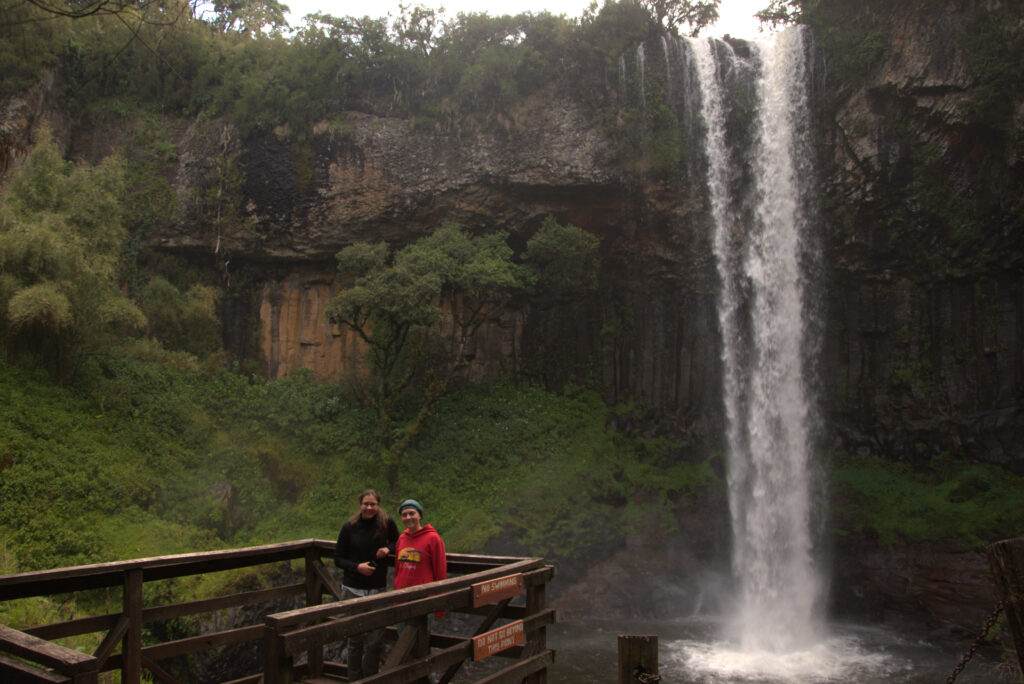
Karuru Falls is the crown jewel.
At 273 metres, it’s Kenya’s tallest waterfall.
Not just tall – it drops in three dramatic stages:
- First drop: 117m
- Second drop: 26m
- Third drop: 130m
The sound alone is worth the trek.
You hear it before you see it.
Then you round a corner and there it is.
Water plunging down three tiers of moss-covered rock face into a gorge below.
Getting to Karuru Falls:
The hike from the Mutubio Gate parking area is about 3km.
Not long, but the altitude makes it feel longer.
You walk through bamboo canopy that filters sunlight into green-gold beams.
Birds everywhere.
Buffalo dung on the trail (yes, armed Kenya Wildlife Service rangers come with you for a reason).
Then suddenly, the forest opens up.
And you’re standing at the viewpoint staring at 273 metres of falling water.
Gura Falls sits nearby.
It’s actually taller than Karuru at roughly 300m.
But it’s tucked away in a gorge, so you view it from a distance.
Still absolutely spectacular.
From the Karuru viewpoint, you can see both waterfalls at once.
Two of Kenya’s highest waterfalls in one frame.
Chania Falls is the smaller sibling.
Located in the northwest section of the Aberdares.
Less dramatic than Karuru and Gura, but set in a stunning forest amphitheatre.
Perfect for a picnic after the hike.
Other Aberdare waterfalls worth visiting:
- Magura Falls – easy 10-minute walk from parking
- Chain Waterfalls – southeastern moorland area
- Kereita Waterfall – accessible via Carbacid trail
Here’s what most people don’t realise about these waterfalls.
They’re fed by the Aberdare mountain range water catchment system.
This entire ecosystem acts as a massive sponge.
Rainfall soaks into the moorlands.
Filters through volcanic rock.
Feeds rivers that supply water to Nairobi and central Kenya.
Without the Aberdares, millions of people would have no clean water.
That’s why conservation here isn’t just about protecting wildlife.
It’s about survival.
The electric fencing around the park?
It keeps elephants and buffalo from wandering into farms.
But it also protects this critical water source from human encroachment.
Every time you visit the Aberdare waterfalls, your park fees fund this conservation work.
You’re not just seeing beautiful scenery.
You’re supporting an ecosystem that keeps Kenya running.
Unique Geological Marvels
The Aberdare geology is wild.
We’re talking volcanic formations that look like they were designed by an artist on hallucinogens.
The 12 Apostles and Twin Hills
The Dragon’s Teeth gets all the attention.
And fair enough – it’s stunning.
These jagged rock pinnacles jut out from the moorland like, well, dragon’s teeth.
Some call it the most beautiful mountain feature in Kenya.
It sits at 3,687m and the rocks look impossibly sharp against the sky.
But here’s what we always tell our clients at Daring Escapes.
Don’t sleep on the other formations.
The 12 Apostles are a series of volcanic plugs.
Twelve distinct peaks clustered together.
Each one different.
Each one climbable.
The rock is volcanic tuff – compressed ash from ancient eruptions.
It’s like hiking through a geology textbook.
Twin Hills do exactly what the name suggests.
Two perfectly symmetrical peaks rising from the moorland.
Side by side.
Almost identical.
Locals say they’re twin spirits guarding the mountain.
I say they’re just really photogenic.
Other geological features in the Aberdares:
- Table Mountains – flat-topped volcanic peaks
- Rurimeria Moorlands – ancient lava flows covered in tussock grass
- Queen’s Cave – volcanic cave system used as a Mau Mau hideout
- Field Marshall Dedan Kimathi’s hideout – historical cave between Honi Campsite and Elephant Ridge
The volcanic activity that created these formations happened millions of years ago.
But the landscape still looks raw.
Primal.
Like the earth just cooled down yesterday.
Walking through these areas, you’re literally standing on the roof of Kenya’s water tower.
The volcanic rock beneath your feet is porous.
Every drop of rain that falls here gets filtered through millions of tiny holes in the rock.
It emerges months later as crystal-clear spring water.
This is why the Aberdare mountain ecosystem is irreplaceable.
You can’t recreate millions of years of volcanic geology.
You can only protect what’s already there.
Planning Your Adventure: Logistics and Access
Right, let’s get practical.
Because the Aberdares aren’t like other parks where you just drive through a gate.
This place requires planning.
Best time to visit the Aberdare Range:
Dry season (June to September, December to February):
- Roads are passable
- Trails less muddy
- Clear views
- Easier wildlife spotting
- Better for summit attempts
Wet season (March to May, October to November):
- Roads can be impassable (4×4 essential)
- Waterfalls at maximum flow
- Fewer tourists
- Lush vegetation
- Challenging but rewarding
Access gates to Aberdare National Park:
- Mutubio Gate (West) – main access for waterfalls
- Ruhuruini Gate (East) – access to moorlands and peaks
- Ark Gate – for lodge visitors
Entry fees (2026 rates):
- East African citizens: KES 800 (adults), KES 500 (students/children)
- Residents: KES 1,100 (adults), KES 675 (students/children)
- Non-residents: USD 70 (adults), USD 40 (students/children)
- African citizens: USD 40 (adults), USD 20 (students/children)
Where to stay in the Aberdares:
Campsites:
- Private campsites – KES 250-700 (citizens/residents), USD 20-50 (non-residents/African citizens)
- Public campsites – KES 200-350 (citizens/residents), USD 15-30 (non-residents/African citizens)
- Honi Campsite – basic facilities, 2,750m altitude
- Fence Watchers Camp – 2,750m altitude
- Multiple designated bush camping areas (permit required)
Lodges:
- The Ark – famous for night wildlife viewing
- Treetops Lodge – historic, where Princess Elizabeth became Queen
- Aberdare Country Club – luxury option with 1,300-acre sanctuary
What to pack for Aberdare hiking:
- Waterproof jacket (weather changes fast)
- Warm layers (it’s cold at 4,000m)
- Proper hiking boots (trails are rough)
- Sunscreen (UV is intense at altitude)
- Water purification (or carry enough water)
- Headlamp (essential if camping)
- First aid kit
- Whistle (for emergencies)
Wildlife safety:
You’re in proper wilderness here.
Buffalo, elephants, leopards, and the endangered black rhino all roam freely.
Armed Kenya Wildlife Service rangers accompany all hiking groups.
This isn’t optional.
It’s mandatory and included in your fees.
Listen to your ranger.
They know these mountains better than anyone.
Getting there:
From Nairobi: 100-150km depending on which gate (2-3 hours drive)
4×4 vehicle is mandatory for most park roads.
Especially in wet season.
Don’t try this in a saloon car.
We’ve seen too many stuck vehicles.
Mobile network:
Forget it.
Coverage is patchy at best.
Non-existent at worst.
Tell people where you’re going before you leave.
Download offline maps.
Bring a physical map as backup.
Guided vs independent:
Here’s my honest take.
You can do this independently if you’re experienced.
But the Aberdares punish mistakes.
Weather changes in minutes.
Trails aren’t well marked.
Altitude affects people differently.
Wildlife encounters are real.
At Daring Escapes, we’ve spent years learning these mountains.
We know which trails are safe.
Which campsites have water.
Where to avoid during elephant migration.
When to turn back because weather’s rolling in.
That local knowledge?
It’s the difference between an epic adventure and a survival situation.
Plus, having someone else handle logistics means you actually enjoy the experience.
Instead of stressing about permits, rangers, camping gear, and navigation.
Conservation impact:
Every shilling you spend in the Aberdares funds critical conservation.
The electric fence maintenance alone costs millions annually.
Ranger patrols.
Anti-poaching efforts.
Water catchment protection.
Community wildlife compensation programs.
Your visit directly supports all of this.
Tourism isn’t just about taking photos here.
It’s about keeping this ecosystem alive for future generations.
Why the Aberdare Range Should Be Your Next Adventure
Look, Kenya has no shortage of beautiful places.
But the Aberdares?
They hit different.
This is where you go when you want the real Kenya.
Not the tourist brochure version.
The raw, unfiltered, “I can’t believe places like this still exist” version.
What you get in the Aberdare mountain range:
✓ Kenya’s highest waterfalls
✓ Peaks reaching over 4,000m
✓ Uncrowded trails
✓ Serious wildlife encounters
✓ Geological wonders
✓ Historical significance (Mau Mau hideouts)
✓ Critical conservation area
✓ Challenging hikes for all levels
✓ Views that’ll ruin other mountains for you
Most travellers come to Kenya for safari.
Maybe throw in some beach time.
Nothing wrong with that.
But if you want stories that’ll last longer than your tan, you need mountains.
And the Aberdares deliver.
After years of guiding people through Kenya’s hidden gems at Daring Escapes, I can tell you this:
The people who skip the Aberdares always regret it.
The people who go?
They start planning their return trip before they’ve even left.
So here’s your call to action.
Stop scrolling through the same tired travel content.
Stop going where everyone else goes.
The Aberdare Range is waiting.
And trust me, it’s worth every step.
Frequently Asked Questions About the Aberdare Range
How difficult is hiking in the Aberdare Range?
It depends on which peak or trail you choose. Waterfall hikes like Karuru are moderate – about 3km with some altitude gain. Summit attempts like Ol Donyo Le Satima are challenging due to altitude (4,001m) and terrain. Elephant Hill is considered the hardest trek in the Aberdares. If you’re reasonably fit and acclimatised, most trails are doable. But don’t underestimate the altitude impact – even experienced hikers feel it above 3,500m.
Do I need a guide to hike in the Aberdares?
Technically, you can hike independently. But armed Kenya Wildlife Service rangers must accompany you (mandatory for safety). The bigger question is whether you want to navigate alone. Trails aren’t always well-marked. Weather changes rapidly. Wildlife encounters require local knowledge. Most visitors book with experienced operators like Daring Escapes who handle all logistics, permits, and safety protocols.
What’s the best time of year to visit the Aberdare mountain range?
Dry season (June-September and December-February) is best for most activities. Roads are passable, trails are less muddy, and summit attempts are safer. However, wet season (March-May, October-November) offers maximum waterfall flow and fewer crowds. If you’re chasing waterfalls, wet season is spectacular. Just be prepared for challenging road conditions and muddy trails.
Can I see wildlife in the Aberdares?
Absolutely. The Aberdare National Park is home to elephants, buffalo, leopards, and the critically endangered black rhino. The Ark and Treetops lodges are famous for nocturnal wildlife viewing. During hikes, buffalo and elephant encounters are common (hence the armed rangers). You might spot bushbuck, duiker, colobus monkeys, and over 250 bird species. Wildlife viewing is actually better here than in many busier parks because the animals are less habituated to vehicles.
How far is the Aberdare Range from Nairobi?
About 100-150km depending on which gate you’re entering. That’s roughly 2-3 hours drive from Nairobi. Mutubio Gate (west side) is closer for waterfall access. Ruhuruini Gate (east side) takes a bit longer but accesses the moorlands. You’ll need a 4×4 vehicle, especially if visiting during or after rains. Entry fees are KES 800 for East African citizens and USD 70 for non-residents (adults).
Are there accommodation options inside Aberdare National Park?
Yes, several options exist: Campsites:
- Private campsites (KES 250-700 for citizens/residents, USD 20-50 for non-residents)
- Public campsites (KES 200-350 for citizens/residents, USD 15-30 for non-residents)
- Honi Campsite and Fence Watchers Camp with basic facilities
- Designated bush camping areas (permit required)
Lodges: The Ark (famous for wildlife viewing), Treetops Lodge (historical significance), and Aberdare Country Club. Camping gives you the raw wilderness experience. Lodges offer comfort with heated rooms and nocturnal wildlife viewing from viewing decks.
What should I pack for an Aberdare hiking trip?
Essential items include: Waterproof jacket and trousers (weather changes fast) Warm layers (fleece, down jacket for summit attempts) Proper hiking boots with ankle support Sun protection (hat, sunscreen, sunglasses) Headlamp with extra batteries Water (or purification system) Energy snacks First aid kit Whistle for emergencies Warm sleeping bag if camping (temperatures drop below freezing at night)
Is the Aberdare Range safe for tourists?
Yes, when proper precautions are followed. Armed KWS rangers accompany all hiking groups for wildlife safety. The electric fence around the park is well-maintained. Main risks are altitude sickness, sudden weather changes, and getting lost. Stick with experienced guides, follow ranger instructions, and don’t attempt summit hikes without proper acclimatisation. Solo hiking is not recommended – always go with a group or professional guide service.
How high are the waterfalls in the Aberdares?
The Aberdares has Kenya’s highest waterfalls: Karuru Falls: 273m (three-stage drop – 117m, 26m, 130m) Gura Falls: Approximately 300m Chania Falls: Smaller but scenic These are legitimate world-class waterfalls. Karuru Falls alone is higher than Niagara Falls (51m) and Victoria Falls (108m).
Can beginners hike in the Aberdare Range?
Yes, but choose your routes carefully. Waterfall trails like Karuru and Magura are suitable for reasonably fit beginners. They’re short (3-10km) with manageable elevation gain. Summit attempts like Satima or Elephant Hill require good fitness and preferably some high-altitude hiking experience. Start with easier trails, see how you handle the altitude, then progress to harder peaks. Going with a guide helps tremendously as they can adjust plans based on your fitness level.