

The Aberdares do not feel like the Kenya most people expect.
Fog moves through bamboo forests, waterfalls disappear into deep valleys, and wildlife hides inside one of Kenya’s coldest and wildest landscapes.
This guide covers the sites, wildlife, camping, and realities worth knowing before exploring the Aberdares.
Why the Aberdares feel different from the rest of Kenya
The Aberdares do not feel like the Kenya most people imagine.
You do not arrive to open savannah or endless dry plains.
The road climbs instead. Temperature drops. Fog starts moving through bamboo forest, waterfalls disappear into thick valleys, and the landscape slowly turns colder, wetter, and quieter.
Set between roughly 2,000 and 4,000 metres above sea level, the Aberdare Range forms one of Kenya’s most important water catchment systems.
Rainfall collects in the high moorlands, filters through volcanic ground, and feeds rivers that supply much of central Kenya.
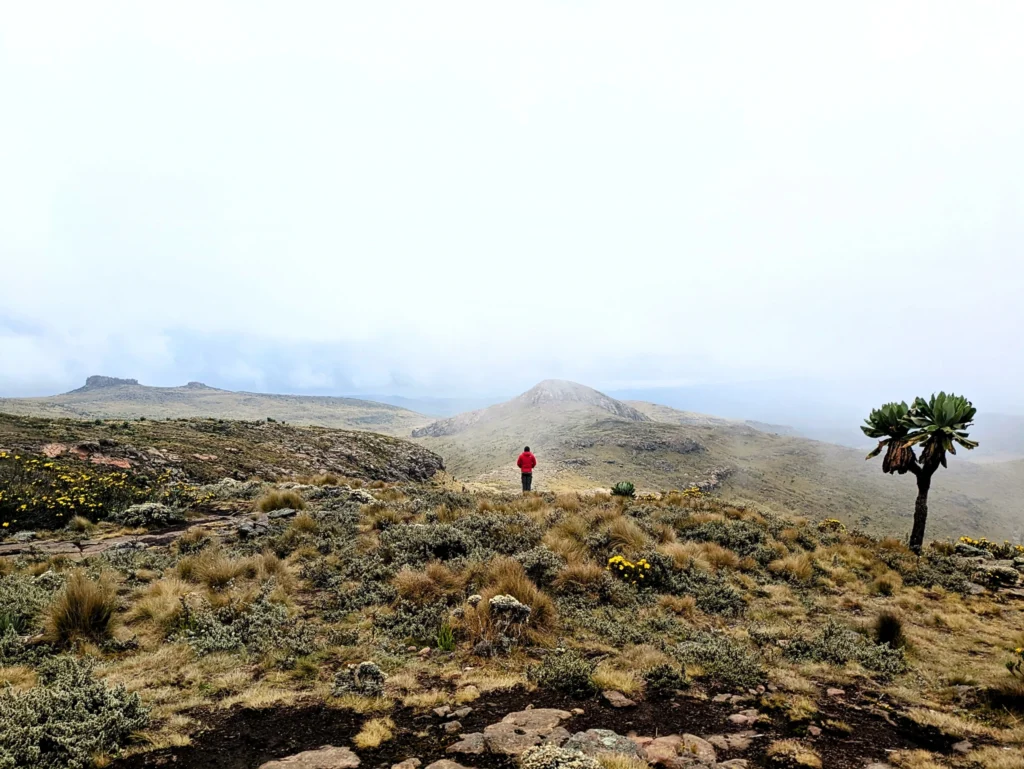
That constant moisture shapes everything here.
Giant forest canopies, dense bamboo zones, black muddy trails, and mist that can roll in without warning even in the middle of the afternoon.
And that unpredictability is part of what makes the Aberdares feel almost un-Kenyan.
One hour the landscape is clear and open, the next, clouds swallow entire ridgelines and visibility drops to a few metres.
Buffalo move silently through the forest. Colobus monkeys disappear into the canopy. Even the light feels different here.
The Aberdares are not built around easy views or classic safari moments.
They feel older, rougher, and more hidden than most places in Kenya.
And that’s exactly why people who come here rarely forget it.
The landscapes that define the Aberdares
The Aberdares are not one single landscape.
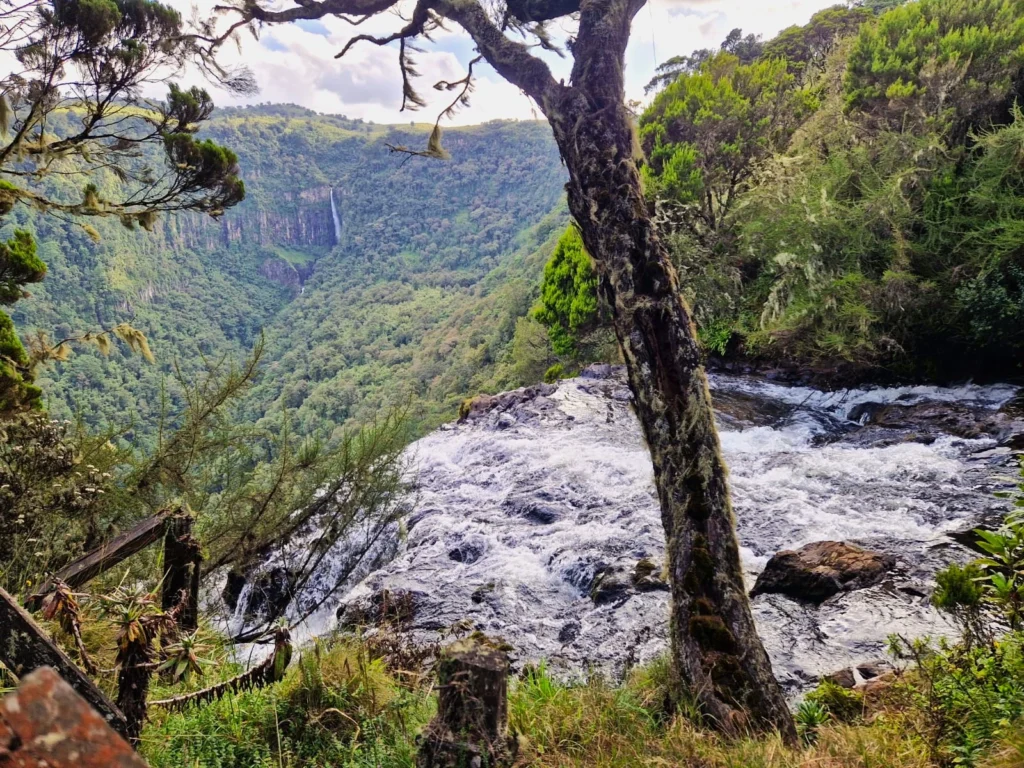
That’s what catches most people off guard. Within the same park, you move between waterfalls, bamboo jungle, open moorlands, volcanic ridges, caves, and thick foggy forest that barely feels like Kenya anymore.
Here are the places that define the experience best:
1. Karuru Falls: Kenya’s tallest waterfall
This is the waterfall most people come for first, and it earns that reputation properly.
- Height: 273 metres
- Best for: Waterfall views, forest walks, photography
- Atmosphere: Cold, misty, loud
You hear Karuru before you see it.
The trail moves through dense forest and suddenly opens above a massive gorge where the waterfall drops in three separate stages through the cliffs below.
During rainy months, the amount of water crashing through the valley is hard to describe properly.
Nearby viewpoints also reveal Gura Falls deeper in the landscape.
2. Gura Falls: hidden deeper inside the forest
Gura feels rougher and less accessible than Karuru.
- Best for: Remote scenery, dramatic valleys
- Atmosphere: Wilder, quieter, more isolated
The waterfall drops deep into a forested gorge often covered by mist and low cloud.
You usually see it from viewpoints rather than directly beside the falls themselves, which somehow makes it feel even bigger.
After heavy rain, the entire valley fills with noise.
3. Chania Falls: the quieter side of the Aberdares
Chania feels calmer than the larger waterfalls further south.
- Best for: Slower walks, forest scenery, colder weather
- Atmosphere: Peaceful, green, quieter
The forest here feels thicker and more enclosed. Cold air settles through the valley and the waterfall disappears between moss-covered rock and dense vegetation.
4. The bamboo forests and foggy trails
This is the part of the Aberdares most people remember longest.
- Best for: Atmosphere, wildlife encounters, raw forest scenery
- Atmosphere: Dark, wet, unpredictable
Some sections of the park are covered in dense bamboo corridors where visibility changes constantly once fog starts rolling through.
Elephant paths cut through the forest floor, buffalo move quietly through the vegetation, and the trails become muddy fast after rain.
It feels ancient.
5. The moorlands and volcanic viewpoints
Higher in the Aberdares, the forest suddenly disappears.
- Best for: Open views, sunrise hikes, alpine scenery
- Atmosphere: Windy, exposed, surreal
The moorlands sit above the tree line, covered in giant lobelias, volcanic rock, and rolling hills that vanish into cloud cover.
On clear mornings, viewpoints open toward the Rift Valley and even Mount Kenya in the distance.
Then weather shifts again and everything disappears back into fog.
6. The caves hidden inside the forest
The Aberdares also carry part of Kenya’s resistance history.
- Best for: History, remote exploration
- Atmosphere: Quiet, heavy, hidden
Several caves inside the forest were once used by Mau Mau fighters during Kenya’s independence struggle.
Others sit quietly beside remote trails with almost no signs around them.
Most people pass through the Aberdares expecting scenery.
They leave remembering the atmosphere instead.
7. The hiking trails that define the Aberdares
Beyond the waterfalls and forests lies what many consider the best part of the Aberdares: the trails.
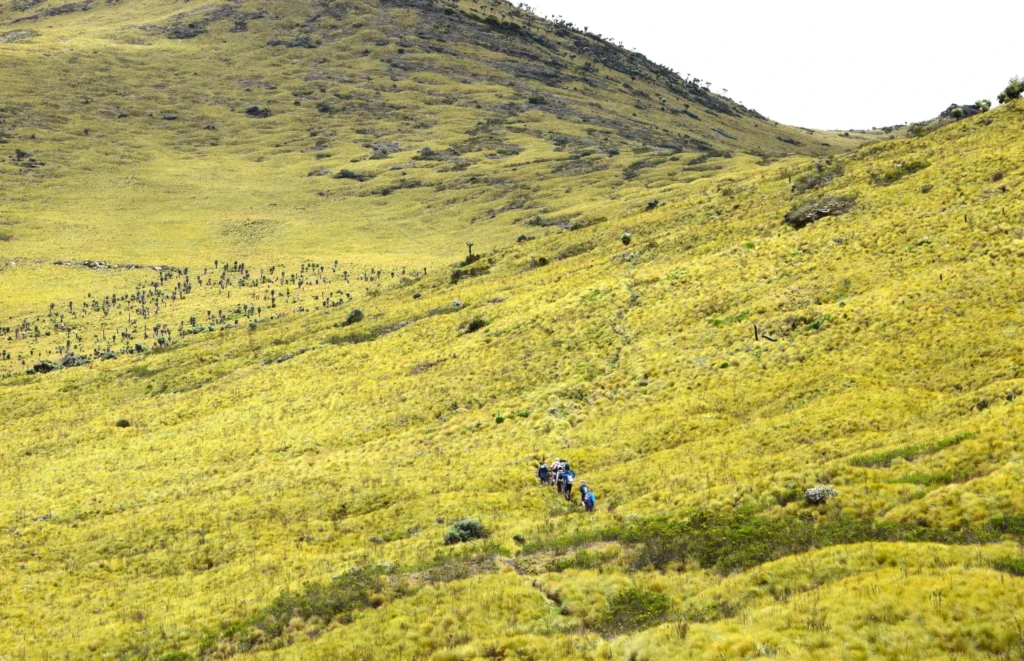
Routes like Elephant Hill, Mount Satima, the Table Mountains, Dragon’s Teeth, and Ragia Forest take you through bamboo jungle, volcanic ridges, caves, moorlands, and high-altitude viewpoints that feel completely different from the rest of the country.
Some are brutal. Some are surprisingly peaceful. Most are far less crowded than they should be.
We break down the best Aberdare hikes, difficulty levels, and what each trail actually feels like in our full Aberdare hiking guide.
Wildlife hidden inside the forest
When you move through the Aberdares’ raw landscapes, you quickly realise you are not alone. Wildlife exists everywhere here, just very differently from the classic safari most people imagine.
The dense forest and bamboo zones hide much of the park’s wildlife, which means you often hear animals before you see them.
Branches snapping somewhere beyond the fog, movement through thick vegetation, or distant calls echoing through the valleys become part of the experience.
The Aberdares are especially important for the rare mountain bongo, one of the most endangered antelope species in the world.
These large forest antelopes are known for their deep chestnut coats and thin white stripes, helping them disappear into dense vegetation surprisingly easily.
Forest elephants also move through the park, particularly around bamboo zones and muddy trails where they have carved paths through the landscape over generations.
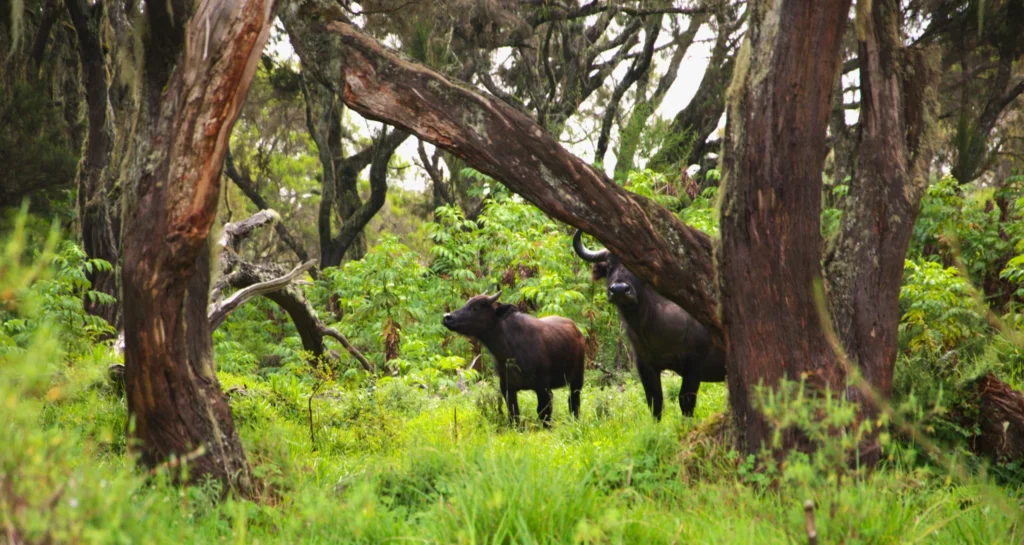
Buffalo are common too, usually appearing near clearings, swamps, and forest edges, often much closer than expected.
High in the canopy, black-and-white colobus monkeys move between trees while birdlife fills the forest almost constantly.
The Aberdares support hundreds of bird species, including Hartlaub’s turacos, crowned eagles, sunbirds, and large forest owls hidden deep inside the canopy.
Some guides and locals still speak about rare black leopard sightings inside the deeper forest sections, although encounters remain extremely uncommon.
That’s what makes wildlife in the Aberdares feel so different.
You rarely experience it as a performance out on open plains.
Here, wildlife feels hidden inside the landscape itself.
Sleeping inside the Aberdares: everything you need to know
If you decide to spend a night in the Aberdares, you quickly realise the landscape does not soften after sunset.
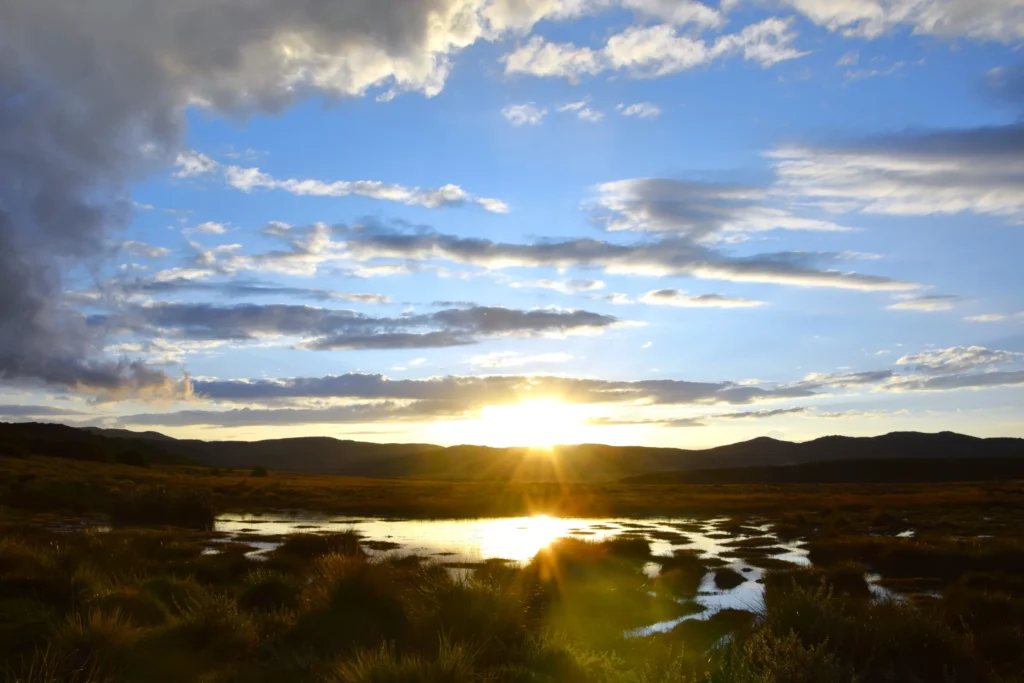
Camping here feels raw in a way very few places in Kenya still do.
Temperatures drop fast once evening fog moves through the forest.
Rain can arrive suddenly even during drier months, and the ground turns muddy almost immediately.
Nights are cold, damp, and extremely quiet until you suddenly hear movement somewhere beyond the trees.
That’s part of why camping in the Aberdares feels so memorable.
The park offers both public and special campsites spread through different sections of the forest and moorlands.
Here is a guide of a few of the better campsites inside the Aberdales:
1. Honi Campsite
Located in the northern moorlands near the Honi River, this campsite sits at roughly 3100 metres above sea level and is known for colder temperatures, alpine scenery, birdlife, and quieter surroundings far from the busier sections of the park.
Camping fees (2026):
- East African Citizens: KES 200 pp/night
- Residents: KES 300 pp/night
- Non-residents: USD 20 pp/night
2. Wandare Campsite
Positioned near Wandare Gate, this campsite is popular with hikers exploring nearby highland trails and moorland sections of the Aberdares.
The area feels more open than the lower forests and offers cooler mountain scenery.
Camping fees (2026):
- East African Citizens: KES 200 pp/night
- Residents: KES 300 pp/night
- Non-residents: USD 20 pp/night
3. Twin Hills Campsite
Located near the Gura Falls region, Twin Hills combines forest scenery, river valleys, cooler weather, and easier access to some of the park’s best waterfall viewpoints.
Camping fees (2026):
- East African Citizens: KES 200 pp/night
- Residents: KES 300 pp/night
- Non-residents: USD 20 pp/night
4. Moorland Campsite
One of the most remote camping areas inside the Aberdares, Moorland Campsite sits deep within the high-altitude moorlands surrounded by volcanic scenery, open ridges, and panoramic mountain views.
Camping fees (2026):
- East African Citizens: KES 200 pp/night
- Residents: KES 300 pp/night
- Non-residents: USD 20 pp/night
5. Fishing Lodge Campsite & Bandas
Located near river sections inside the park, the Fishing Lodge area is known for its peaceful forest atmosphere, colder mornings, trout fishing access, and quieter overnight stays deeper inside the Aberdare landscape.
The nearby self-catering bandas also make it one of the more comfortable overnight options inside the park.
Camping fees (2026):
- East African Citizens: KES 200 pp/night
- Residents: KES 300 pp/night
- Non-residents: USD 20 pp/night
Prices remain fairly accessible compared to many safari destinations in Kenya.
Public campsites are usually the cheaper option, while special campsites cost more for added privacy and more isolated locations inside the park.
Entry fees and vehicle fees are paid separately through Kenya Wildlife Service.
But the bigger reality is preparation.
Warm clothing matters here far more than most visitors expect.
Waterproof layers, proper boots, and dry gear become essential once weather changes.
Some roads inside the park also become difficult after heavy rain, especially in remote sections near forest trails and campsites.
And unlike open savannah parks, camping here means sharing the landscape much more directly with the wildlife that moves through it.
In more remote sections, armed rangers may be required depending on the area and activity planned.
Because conditions in the Aberdares can change quickly, many travellers choose to explore the park with experienced local guides or organised multi-day camping trips, especially when visiting more remote sections of the forest and moorlands.
The Aberdares are not polished camping. That’s exactly the point.
You come for the fog moving through the trees at sunrise, cold air settling over the forest at night, and the feeling of being deep inside one of Kenya’s wildest landscapes.
What most people underestimate about the Aberdares
The Aberdares are far rougher than many people expect before arriving.
A lot of visitors come prepared for a normal safari park and quickly realise this landscape plays by completely different rules.
Signal also disappears completely in some sections of the park.
Temperatures drop hard once fog and rain move through the forest, especially at higher elevations above 3,000 metres.
Even during drier months, weather can change within an hour.
Mud is another reality people underestimate badly.
After rain, some roads inside the park become slow and difficult to navigate, particularly around forest sections and remote campsites.
Trails that look manageable online suddenly feel far steeper and longer once altitude, slippery ground, and cold conditions start combining together.
The weather and terrain here reward preparation properly, never underestimate it.
Conditions can shift fast, especially once rain, altitude, and mud combine together.
A few things make a massive difference:
- Waterproof hiking boots with good grip
- Warm layers for cold nights and early mornings
- Rain jacket or waterproof outer layer
- Extra socks and dry clothes
- Flashlight or headlamp
- Power bank (signal and electricity can be limited)
- Offline maps or downloaded routes
- First-aid kit and basic medication
- Enough drinking water and snacks for long drives or hikes
- Sun protection (hat, sunscreen, sunglasses)
- Insect repellent
- Waterproof bags for cameras and electronics
- Binoculars for wildlife and birdlife
- Sleeping bag and camping gear rated for cold and wet conditions if staying overnight
- Portable stove and cooking equipment for self-camping trips
Why the Aberdares stay with people
The Aberdares are not the easiest part of Kenya to explore.
Roads turn muddy, weather changes without warning, and the forest rarely gives you clear views for very long.
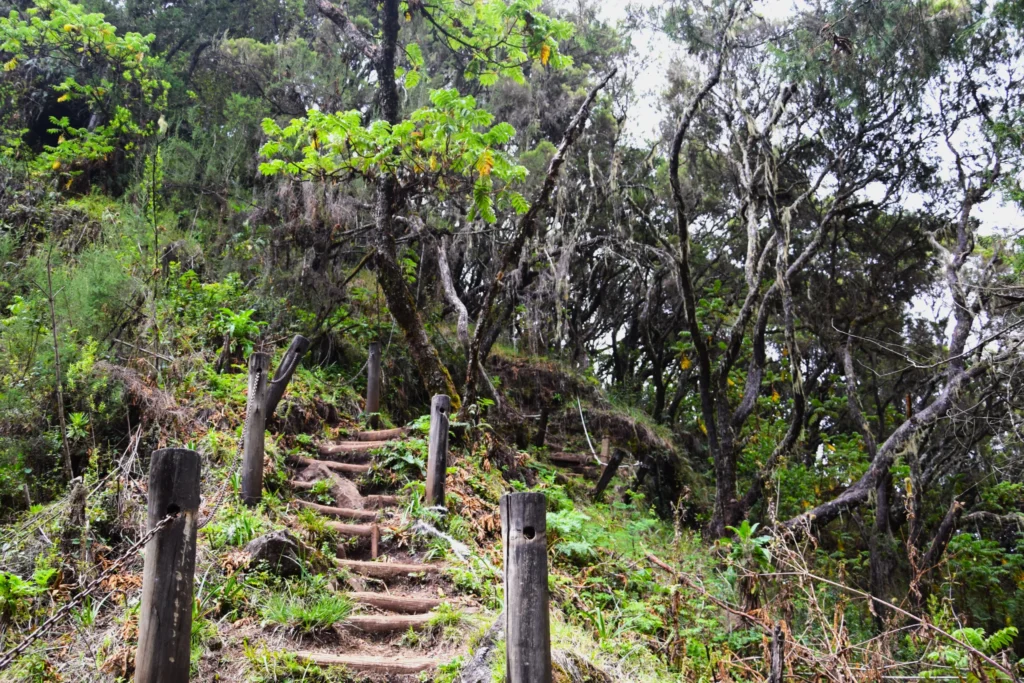
But maybe that’s exactly why the landscape feels so memorable once you leave.
You remember the cold air moving through bamboo at sunrise.
Waterfalls disappearing into fog.
The silence inside the forest before something suddenly moves somewhere beyond the trees.
Nights that feel properly dark and wild again.
The Aberdares do not try to impress people in obvious ways.
They stay with you because they still feel raw, unpredictable, and slightly untouched in a country where many landscapes have become easier to experience.
And once you spend enough time inside these forests, very few places feel quite the same afterwards.
Ready to experience the Aberdares for yourself?