

These Kenya travel tips will make your first few days much easier. Kenya is not difficult to travel through once you understand how entry paperwork, money, transport and weather work here. Problems start when the whole country is planned as one climate and every road is trusted to take the time shown on a map.
Nairobi can be cool in the morning. Amboseli can be hot and dusty by afternoon. The Aberdares may be wet enough for a rain jacket on the same day. Add city traffic, long park roads and patchy signal outside major towns and a little preparation starts doing a lot of work.
Set up the first day properly
Kenya travel tips for entry and the eTA
Check your eligibility on the official Kenya eTA portal before booking around an arrival date. Visitors who require an eTA need approval before starting their journey. That applies to children too. Exemptions exist, so use the official eligibility checker rather than a third-party visa site.
Keep a digital copy of the approval on your phone and another copy somewhere you can reach without mobile data. Carry the passport used for the application. Accommodation details and your travel plans may also be needed during the application or at entry.
Do not plan around a promised approval time from a blog or an agent. Apply early enough to correct a name, passport number or document problem without turning your departure week into unpaid theatre.
Money in Kenya: cards, cash and M-Pesa
M-Pesa is part of ordinary life here. Restaurants, supermarkets, drivers and small businesses often accept it. A registered local Safaricom line can make day-to-day payments easier once the service is active. Buy a SIM from an official shop and carry your passport for registration.
Cards work well at many hotels, restaurants and larger businesses. They are not a complete replacement for cash. Card machines fail. Small shops may not take cards and signal can disappear once you move into remote areas. Keep some Kenyan shillings for tips, roadside stops and small purchases.
Use ATMs attached to banks or inside busy shopping centres. Avoid carrying all your cash in one place. If you use M-Pesa, confirm the recipient name on the screen before approving a payment. A wrong number can turn a simple lunch bill into an unexpectedly social afternoon.

Getting around takes more time than the map suggests
Kenya looks manageable on a map. On the road, it is a different story. Nairobi traffic can add a large delay before a trip has properly started. Roads inside parks are slower than highways and rain can change the route. Avoid stacking a long drive, a flight and a major activity into the same narrow window.
Ride-hailing apps are useful in Nairobi. Confirm the number plate before getting in and ask your hotel or host where the pickup point works best. For airport arrivals, arrange the first transfer before landing if you do not want to deal with SIM setup and pickup directions at the same time.
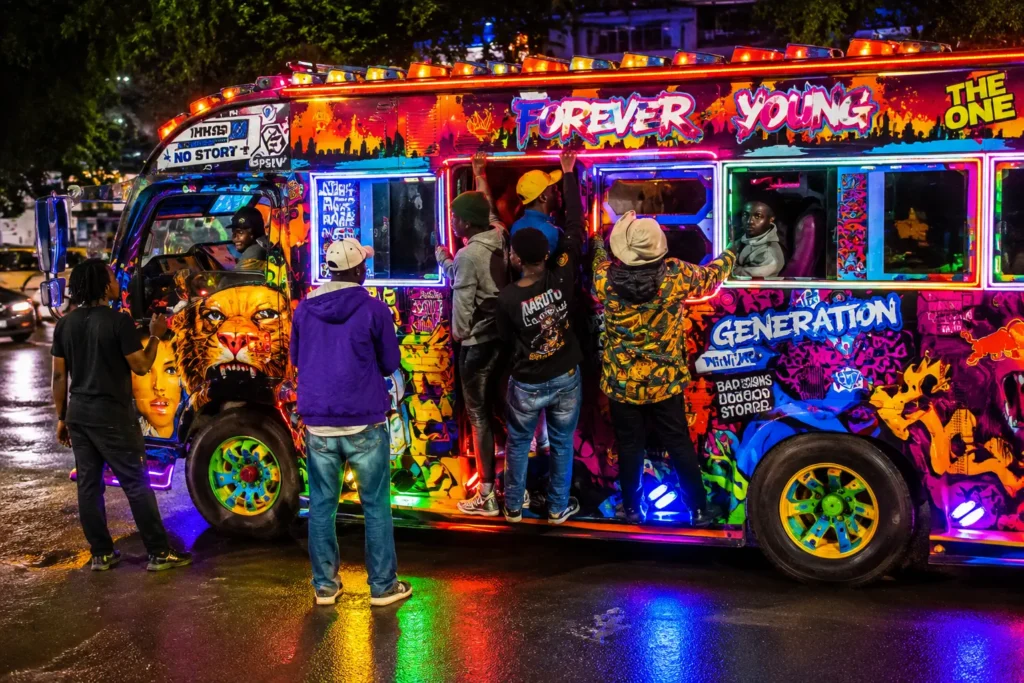
Public matatus are part of daily Kenyan life. They are useful if you know the route and are comfortable with a fast, crowded trip. Most first-time visitors find an arranged driver easier when carrying luggage or moving between destinations. A good driver thinks about fuel, sensible stops and route changes. The road is never just a line between two pins.
Kenya travel tips for packing across three climates
Pack for the route rather than for the word “Africa.” The coast, highlands and dry safari areas can feel like separate trips. One heavy wardrobe is less useful than light layers you can move between your day bag and main luggage.
A power bank is useful on long drives. Bring a reusable water bottle and leave single-use plastic carrier bags at home because they are banned in Kenya. Our carry-on packing guide gives you a tighter system if you want to travel light.
Choose fewer regions and experience them properly
First-time visitors often try to fit too much into one trip. Kenya rewards a slower plan because each region has its own roads, weather and pace. Start with the experience you care about most and build a route that does not spend every second day in transit.
Amboseli works well for open landscapes, elephants and views of Kilimanjaro when the mountain is clear. Samburu is the stronger choice for northern scenery and the Special Five. Naivasha combines boat trips, walking safaris, cycling and nearby hiking. The Aberdares bring forests, moorlands, waterfalls and cold highland mornings. Mount Kenya is for trekkers who want the mountain to be the point of the trip rather than a background.
If you want several regions in one route, our Kenya safari through Samburu, the Aberdares and Naivasha shows how the landscapes can connect without repeating the same type of day. For a shorter base, the Naivasha guide explains what works around the lake.
Weather changes the trip more than the calendar
There is no single best month for every Kenya trip. Dry conditions can make wildlife viewing and road travel simpler. Rain brings greener scenery, fewer vehicles in some areas and more variable roads. The coast may be warm while Mount Kenya and the Aberdares are cold enough for gloves.
Plan around the actual regions on your route. Our Kenya rainy season guide explains what rain changes and what it does not. Keep one flexible layer in your day bag even when the forecast looks settled.
Health and safety without turning the trip into a medical exam
If you are arriving from a country where yellow fever is endemic, carry a valid vaccination certificate. Discuss malaria prevention with a travel clinic because the advice depends on your route and health. Keep regular medication in your hand luggage with enough supply for delays.
Normal city awareness goes a long way. Keep valuables out of sight in crowded places, use transport you can identify and avoid walking around unfamiliar areas with your phone held out. Save your accommodation address offline and share major travel movements with someone you trust.
On safari, stay quiet near animals, do not feed them and avoid flash photography. Follow the guide when they ask you to stay seated or move back. A good guide finds wildlife while reading animal behaviour, road conditions and the people in the vehicle.
Small etiquette choices matter
Ask before photographing people. This matters in cities and even more in rural communities. A camera does not turn someone else’s workday, home or children into public scenery.
Kenya is relaxed about clothing in many places. Swimwear belongs at the beach or pool. Dress more conservatively in religious spaces and some coastal communities. Greet people before jumping into a request. “Habari” or “jambo” is enough and “asante” is always useful.
Tips are appreciated when service has been good. Keep small notes for guides, camp staff and porters rather than expecting everyone to have change. If you bargain in a market, keep it friendly. Saving a tiny amount is not worth making the exchange unpleasant.
Frequently asked questions for a first time in Kenya
Do I need an eTA for Kenya?
Many international visitors do. Check the official eTA eligibility page because exemptions depend on citizenship and travel status. If you need one, get approval before starting the journey.
Should I carry cash in Kenya?
Yes. Cards and M-Pesa cover many payments while cash remains useful for tips, small businesses and places with weak signal. Split your money between two secure locations.
Is a local SIM worth buying?
It usually is if you will travel beyond a short city stay. A local line helps with calls, mobile data and M-Pesa. Use an official shop and expect passport registration.
What should I wear on safari?
Choose light layers in neutral colours, comfortable closed shoes, sun protection and something warm for early starts. White clothing shows dust quickly. Heavy safari costumes are optional. The animals remain unimpressed.
How much should I fit into one Kenya trip?
Fewer regions usually produce a better trip. Long road transfers and early departures can drain the time you expected to spend outside. Choose a clear focus and leave enough room for delays and rest.
Plan your first Kenya trip around real travel days
Most first trips go wrong in the gaps between the exciting parts. The drive was longer than expected. The lodge was in the wrong direction for the next morning. Nobody left room for traffic or rain. A good plan closes those gaps before you land.
If you are unsure how to connect Nairobi, Naivasha, Amboseli, Samburu, the Aberdares or Mount Kenya, talk to us about your route. We will help you choose a pace that fits your dates, interests and energy without packing the trip until it stops being enjoyable.