

Every region worth riding, what each costs and the bike-hire truths nobody puts in writing from people who ride here.
Quick answer: Mountain biking Kenya splits into four real scenes. Hell’s Gate in Naivasha is the famous one, flat and beginner-friendly and you ride it among wildlife. Kijabe is where the locals go for steep, fast, technical riding. Mount Kenya around Nanyuki has the serious high-altitude single-track and the only purpose-built circuit in the country and the Nairobi area (Ngong, Kereita, Karura) is the weekend riding. One thing worth knowing up front is that rental quality at the parks varies a lot, so it pays to hire through someone who’ll put you on a decent bike rather than grabbing whatever’s at the gate.
Search “mountain biking Kenya” and you get trail databases with no prices, a hotel’s Mt Kenya listicle and operators selling a single trip. Nobody puts the whole thing in one place and every region, what it actually costs, how you get there to which bikes will leave you stranded. So we did. We ride here. Where the detail is ours, it’s ours & where it isn’t, we’ve said so.
Jump to whatever fits your trip.
Hell’s Gate National Park … the wildlife ride
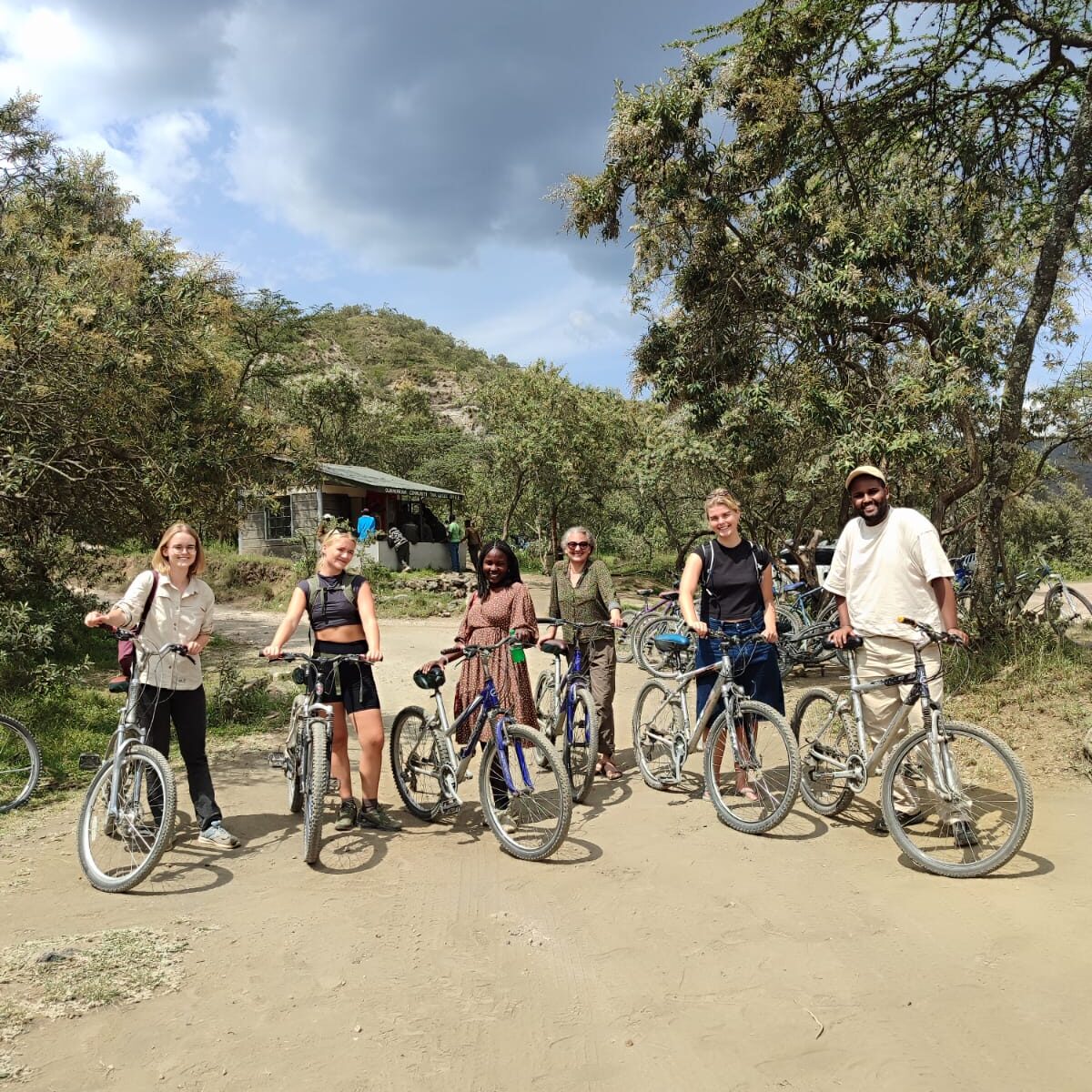
This is the famous one and it earns it. Hell’s Gate is the only national park in Kenya where you’re allowed to cycle among the animals and one of very few anywhere in Africa. You pedal past zebra, giraffe, buffalo and gazelle with nothing between you and them. No fence, no vehicle. For your first ride in Kenya, there’s nothing like it.
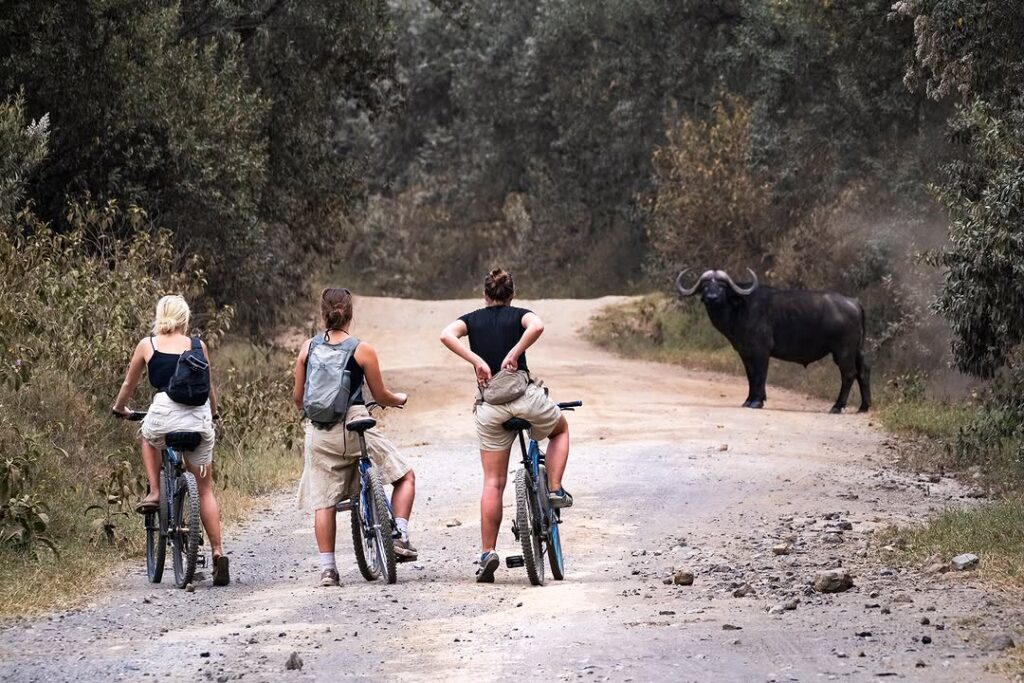
The terrain. The main route is roughly 8 to 10 km from Elsa Gate to the Lower Gorge, on dirt and gravel, mostly flat. The part that nobody warns you about is that it slopes gently downhill on the way in, which means it’s uphill all the way back when you’re already tired. Hold some energy and water for the return and in a dry spell the track turns to soft deep dust that’s genuinely hard work. Two loops you’ll hear named are the Buffalo Circuit 14 km and the Twiga Circuit 9 km.
What it costs. Park entry is set by Kenya Wildlife Service & these rates took effect in October 2025:
| Visitor | Adult | Child / Student |
|---|---|---|
| East African citizen | KES 500 | KES 250 |
| Resident | KES 675 | KES 350 |
| Non-resident | USD 50 | USD 25 |
| African citizen | USD 20 | USD 10 |
Set under Legal Notice No. 160. Check current rates with KWS before you go.
For bikes: a standard rental at the gate runs KES 600 to 1,000, though the opening ask is often KES 2,000, so haggle. Our e-bikes are KES 4,000 modern and the right size, but you book them through us in advance because they’re not sitting at the gate. Bringing your own bike avoids the rental cost entirely. Either way, everyone pays the entry charge of around KES 250 plus a cycling fee of $10 per person (non-residents).
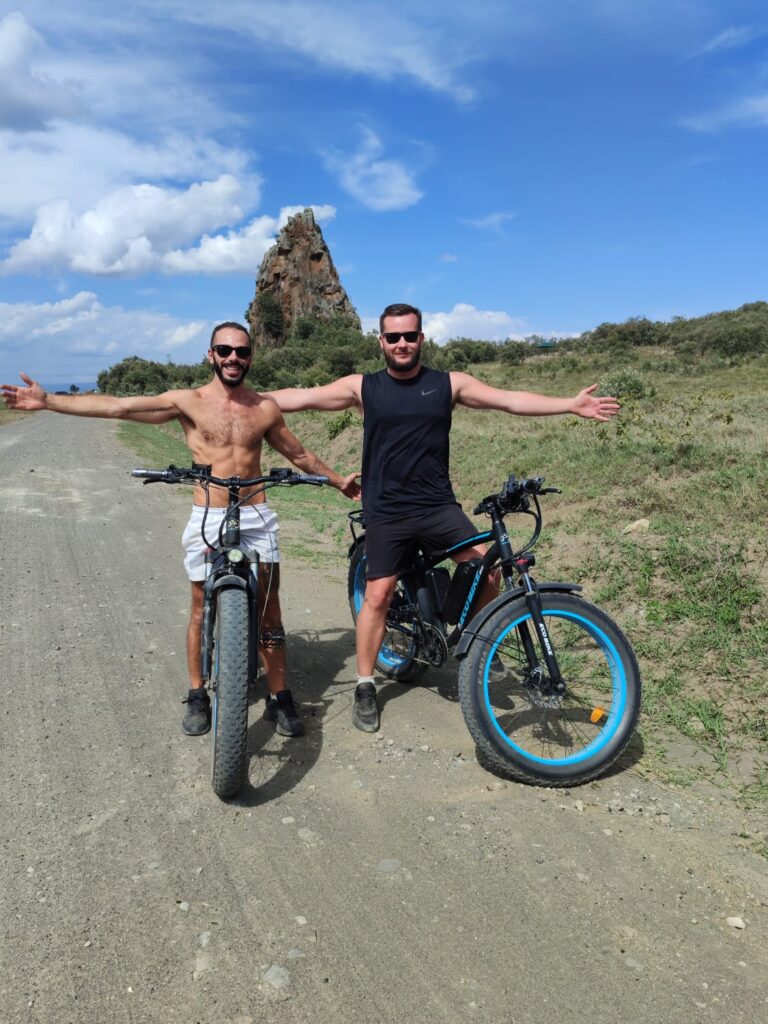
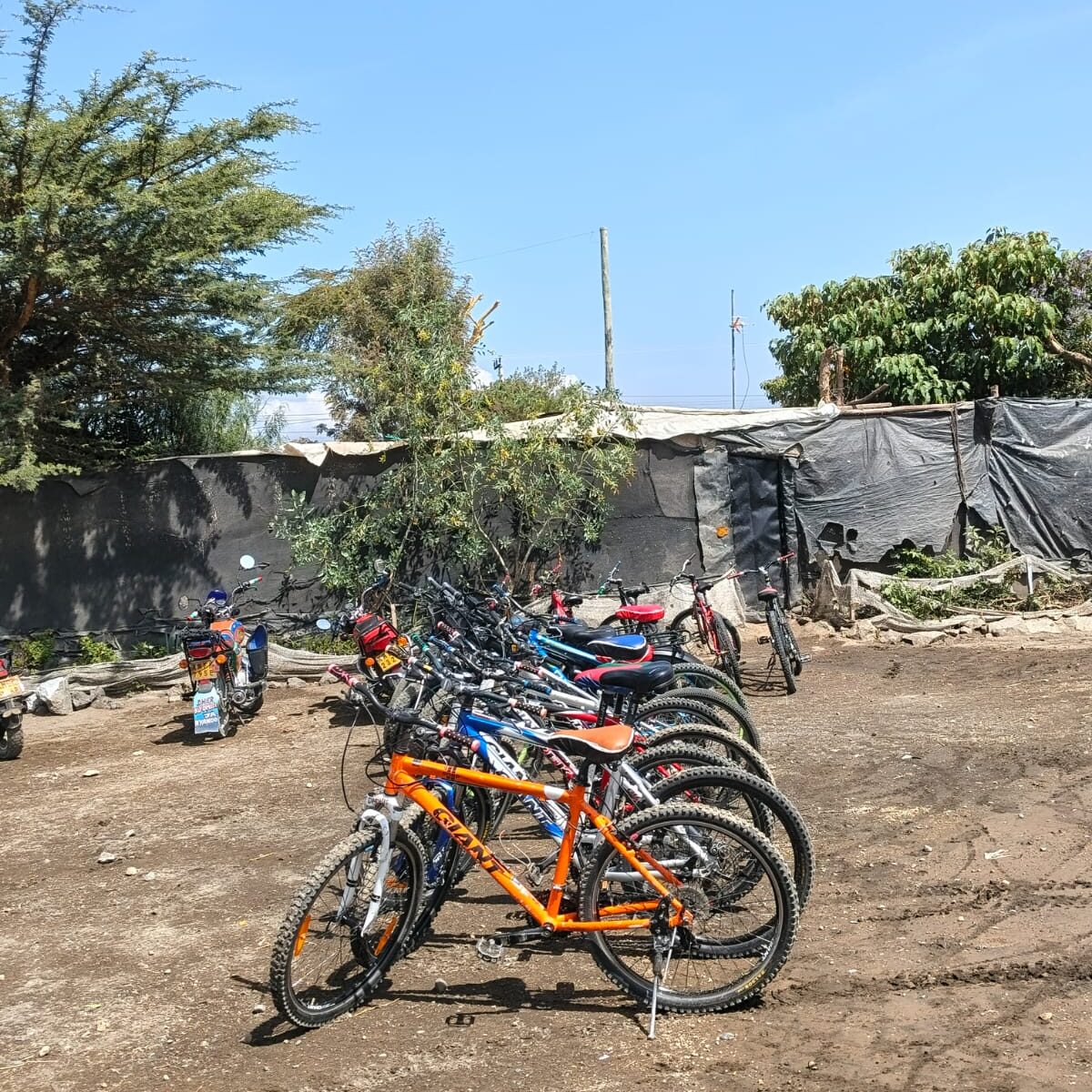
Choose your rental carefully. This is the one thing worth getting right. The bikes at the gate are a mixed bag. Some are old and tired, the wrong size or not well kept and you’ll see riders nursing a skipping chain or waiting on the recovery truck that does the rounds. But there are good bikes there too, if you know who to ask. The trick is hiring through someone who’ll actually put you on a sound bike rather than handing you whatever’s nearest. That’s where we come in, and it’s worth a quick message before you go so you’re not gambling at the gate. A decent bike makes the difference between a great day and a frustrating one, especially if you’re tall or want the steeper western sections.
Bringing your own bike. Worth it. Register it on the eCitizen system before you travel. You can sometimes do it at the gate over the WiFi, but the account can take a few hours to come through and you don’t want to spend your morning on a phone at the entrance so do it from home.
The gorge, as it stands in 2026. A flash flood killed people in the gorge in 2019 and since then you can’t go in alone. You need a guide, either a KWS ranger or an accredited local one. The Lower Gorge is open with a guide, either a short walk of about 30 minutes or a medium one of about an hour. Devil’s Bedroom, the side gorge, is still closed. Older blog posts that have you wandering it freely are out of date.
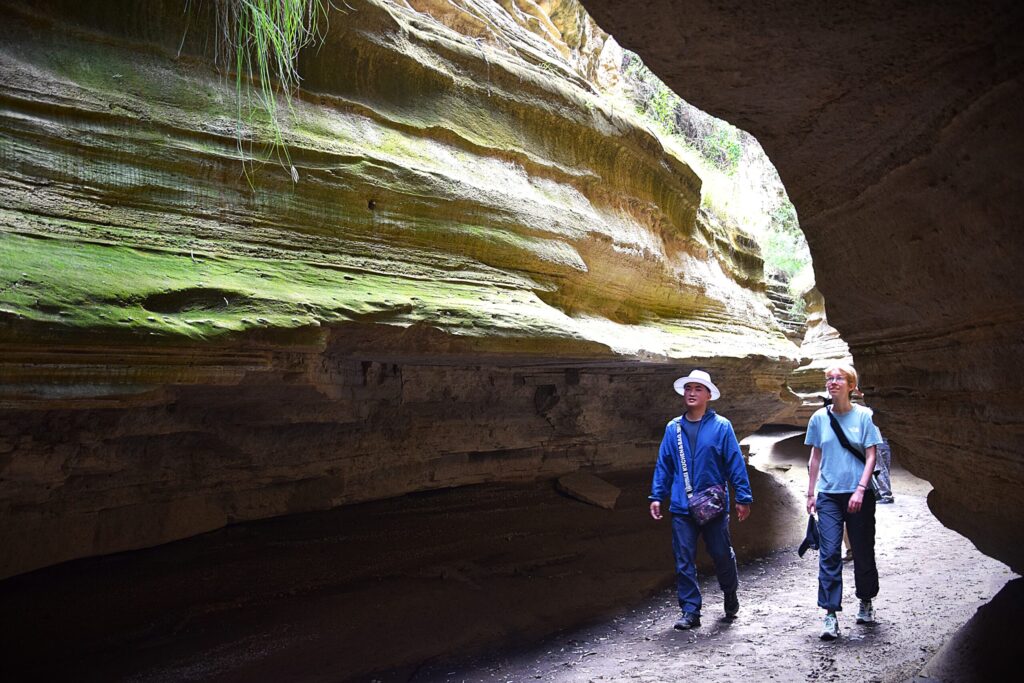
A few things worth knowing. There’s no food inside, so pack lunch and keep an eye on it because the picnic-site monkeys are quick and shameless. Water and drinks are sold only at the gate and the Ranger Post. Phone signal comes and goes. Rentals don’t come with helmets. The park runs roughly 6am to 6 or 7pm. Go early, always. Most riders stay at Lake Naivasha and ride the 5 km in. From Nairobi it’s a two to three hour drive. The full park rundown is in our Hell’s Gate guide.
Kijabe — where the locals actually ride
This is the one the “best trails” lists keep leaving out and it might be the most exciting riding near Nairobi. Kijabe sits on the Kikuyu Escarpment about 60 km northwest of the city and over the last few years it’s grown into one of Kenya’s most popular places to ride, with well over a hundred mapped trails dropping down the steep escarpment.
What makes it different is how the trails came to be. A lot of them were cut by locals riding to and from work, built to get from the top to the bottom as fast as possible. So the riding is fast and serious with flowing green trails at one end, properly steep black descents at the other, with rooty drops and washed-out channels, falling around 400 m off the escarpment. There’s an active crew that maintains the trails and keeps adding features and the area runs its own race called the Kijabe Enduro.
It’s not a tidy bike park coz the trailheads can be near impossible to spot even when you’re standing next to one and the terrain wants a rider who can handle steep and loose. But for an intermediate or advanced rider, it’s the best technical single-track within easy reach of Nairobi. Kijabe sits right next to Kereita on the same escarpment, so plenty of people ride both. About an hour and a half from town.
Mount Kenya — the serious stuff
This is where the riding turns world-class.
The purpose-built one: Rift Valley Adventures’ 35 km circuit near Nanyuki. This is real, maintained single-track built for bikes rather than a hiking path pressed into service, with lines for beginners through to advanced riders. It runs around USD 120 per person for groups of four or more, USD 180 each for three or fewer, with bikes and helmets included. It’s a full day, roughly 9am to 2pm after a skills session, minimum age 12. Their instructors are among the only internationally qualified bike guides in the country, which counts for a lot on technical ground.
The big descents, for strong and self-sufficient riders. People ride sections of the classic mountain routes as descents. The Sirimon route climbs gradually through forest and moorland with around 1,600 m of gain and some riders push on toward Shipton’s Camp at 4,300 m. The Chogoria descent is the most scenic stretch on the whole mountain, dropping the eastern side past Lake Michaelson, with no huts on the way down so you carry everything & the gate is about 64 km from Meru and needs a 4WD. The Naro Moru descent is the steepest, fastest and boggiest of the lot. All of these sit between 3,000 and 4,300 m, need a park ticket and a registered guide above the treeline and demand that you acclimatise first. Mt Kenya adult entry, October 2025: KES 800 for East African citizens, KES 1,100 residents, USD 70 non-residents.
There’s also a dedicated bike park at Naro Moru River Lodge, the only one of its kind in Kenya, with built features, though riders say it needs regular clearing and upkeep.
Ol Pejeta gravel circuit. At the foot of the western slopes, this is a gravel ride across open grassland shared with zebra, buffalo and rhino, on set roads with an armed ranger alongside. Pedalling past elephant at dawn with the peak behind you is hard to beat. It’s a good low-altitude day when the upper mountain is buried in cloud. Ol Pejeta sets its own fees, so check with them.
Lower Nanyuki trails. Gentler riding close to town: Burguret Road, about 11.7 km through Gathiuru forest and the longer Summit MTB Route at around 34 km. Both sit around 2,000 to 2,500 m, ride well most of the year and stay quiet.
The Nairobi area — weekend riding
Ngong Hills. Twenty-five minutes from town, a grassy ridge with the city on one side and a 1,000 m drop into the Rift Valley on the other. Dirt roads, a bit of tarmac, moderate climbs and the wind turbines along the spine which my friend once told me that there are people living inside(but its not true haha). Trailforks rates the Ngong ridge as the biggest descent in the Nairobi area, over 600 m of drop. It rides best dry as the grass gets greasy after rain. Kenya Forest Service entry is around KES 232 for an adult. Ride in a group, not alone, especially toward the southern end.
Kereita Forest. Right beside Kijabe on the same escarpment, about 60 km out, run with the local conservation group KENVO. The riding ranges from easy 5 km loops to technical 15 km trails through forest and bamboo and the spot also has a cave, a waterfall on the Gatamaiyu River and Kenya’s longest zip line if you want to make a day of it. Bike hire is around KES 2,000 for four hours (about KES 1,700 for children), with Kenya Forest Service entry on top. It’s a gazetted forest, so official access can need an escort. going in with a KENVO guide is the simpler route.
Karura and Oloolua. Karura Forest, right in the city, has wide well-kept trails, a small entry fee and bikes for hire. It’s the easiest and safest urban ride and good for families. Oloolua, out in Karen, is a gentle 5 km through indigenous forest along the Mbagathi River.
Events and the big rides
Kenya has a proper riding calendar. The 10to4 Mountain Biking Kenya Challenge on Mt Kenya is the country’s largest cycling event and has been running over twenty years. Multi-day races like the Rift Valley Odyssey and Safari Epic cross the highlands and the Laikipia plains. For the seriously committed, the Kenya Bike Odyssey is a 1,000 km dirt-and-singletrack epic out of Nairobi and a few operators run multi-day bike safaris, some heading toward the Mara. If you want a custom route through the Aberdares or around Mt Kenya that isn’t on any map, that’s the kind of thing we put together by request.
The honest gear reality
- Rental quality at the parks varies, so hire through someone who’ll set you up on a good bike or take an e-bike. A sound bike is worth the small extra effort to arrange.
- Use a mountain bike, not a gravel or road bike. It’s all unpaved and the escarpment trails are loose.
- Altitude is real. Most of this riding sits between 1,800 and 2,600 m and Mt Kenya goes much higher. Acclimatise before the high routes and drink more than you think you need.
- Carry your own water and food. Most of these places sell little or nothing on the trail.
- Bring a helmet. Rentals won’t have one.
- Ride dry where you can. Forest, grass and escarpment trails get slick and risky after rain, and Hell’s Gate dust is at its worst when bone dry. The drier shoulder months are the sweet spot.
- Above the Mt Kenya treeline you need a guide and a park ticket, no exceptions.
For fees and the official rules, Kenya Wildlife Service covers the parks and Kenya Forest Service covers Ngong, Kereita, Kijabe and Karura.
Riding Kenya with us
We run guided mountain biking around Hell’s Gate, Naivasha and the wider Rift Valley, with bikes that actually work, e-bikes included if you’d rather not wrestle a worn rental. Our guides know the trails, the weather and which sections suit which rider. Want something off the standard loop? Tell us what you ride and we’ll build it.
Related reading:
- Hell’s Gate day trip and bike safari →
- Hell’s Gate complete guide — fees, gorge, getting there →
- Affordable camping near Lake Naivasha →