

Naivasha is a city escape built on contrast.
Most people come for one night. That’s usually not enough.
Somewhere between quiet lake mornings, volcanic trails, Hell’s Gate dust, and Rift Valley sunsets, the place becomes surprisingly hard to leave.
Why Naivasha feels different from the rest of Kenya
Leave Nairobi early enough and you can be in Lake Naivasha in under two hours. But the landscape changes so fast it feels much further.
The city disappears, the road drops into the Great Rift Valley, and suddenly you’re surrounded by volcanic cliffs, open water, geothermal steam, and wildlife moving between acacia trees.
That mix is what makes Naivasha different.
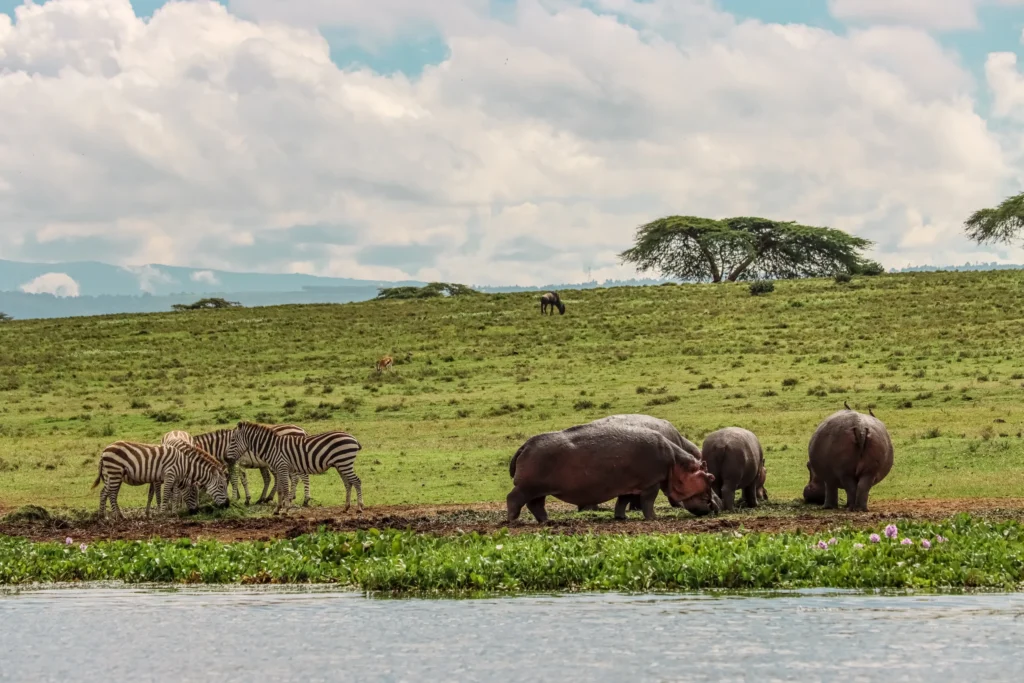
Few places in Kenya bring together a freshwater lake, dormant volcanoes, geothermal activity, hiking trails, and safari experiences all within the same area.
You can spend the morning cycling through Hell’s Gate National Park, go horse riding with mount longonot in the background, watch fish eagles over the lake in the afternoon, then hear hippos outside your lodge at night.
At around 1,880 metres above sea level, Naivasha stays cooler than most safari destinations in Kenya.
Mornings are fresh, evenings can get cold, and weather changes quickly once clouds roll across the escarpment.
The lake itself shapes life here. Flower farms stretch along the shores, old colonial houses still sit hidden among trees, and the Great Rift Valley geology is impossible to ignore.
Steam rises from geothermal plants near Olkaria, volcanic hills surround the basin, and deep underground pressure still defines the region today.
That’s also why Naivasha works for almost any kind of trip. It can be a quick weekend escape from Nairobi, or part of a longer Kenya adventure with hi
Before you reach the lake, you pass through Hell’s Gate
You start understanding why Naivasha feels different the moment you enter Hell’s Gate National Park.
Most parks in Kenya separate you from the landscape. Here, you move through it yourself.
The first recommended thing to do around Naivasha is simple: get on a bike and start riding.
The road cuts through open volcanic terrain where zebra graze beside the track, giraffes move between acacia trees, and massive cliff walls rise straight out of the Rift Valley floor.
Early mornings are the best time to go.
Wildlife is more active, temperatures stay cooler, and the light hitting the cliffs makes the whole park feel sharper.
Weekdays are worth aiming for if possible. Nairobi weekend crowds change the atmosphere completely.
The landscape barely looks real in some sections.
Geothermal steam escapes from the ground near Olkaria, volcanic towers rise above the valley, and narrow gorges cut deep into the rock.
Parts of the park helped inspire the landscapes in Disney’s The Lion King, and once you’re inside the gorge systems, it makes sense immediately.
But Hell’s Gate is not as easy as Instagram makes it look.
The altitude and heat catch people off guard quickly.
Afternoon sun reflects hard off the rock, and the cycling route slowly drains your legs more than expected, especially once wind picks up later in the day.
During rainy periods, some gorge sections close because flash floods here are serious.
Honestly, once you’re cycling between those cliffs with heat bouncing off the rock and steam rising in the distance, the name starts making sense pretty quickly.
It’s tougher than people expect, but that’s part of why it stays memorable.
Where Naivasha slows down: the lake at its heart
After the heat and dust of Hell’s Gate National Park, the lake changes the atmosphere completely.
Mornings on Lake Naivasha are usually quiet.
Thin mist hangs above the water, fish eagles call across the shoreline, and the surface stays almost perfectly still before the afternoon wind arrives.
Then you hear the hippos somewhere in the reeds, usually closer than expected.
Getting onto the water is easily one of the best things to do around Naivasha.
Kayaking especially changes the experience. You move through the lake quietly instead of simply crossing it.
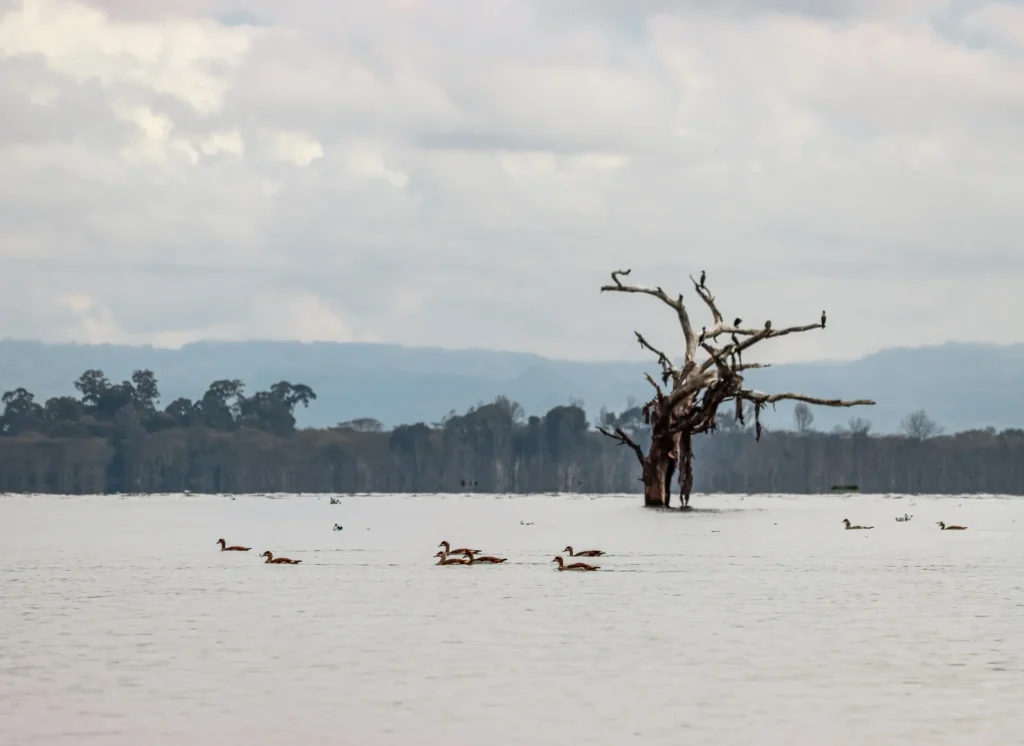
Cormorants dry their wings on dead trees, buffalo stand near the shoreline, and giraffes sometimes appear between the acacia further inland.
One of the best ways to finish a lake morning is at Crescent Island Game Sanctuary, where you can walk among giraffe, zebra, and antelope without vehicles around you.
Further beyond the shoreline, places like Soysambu Conservancy help protect the wider ecosystem surrounding the lake.
But Naivasha deserves respect too.
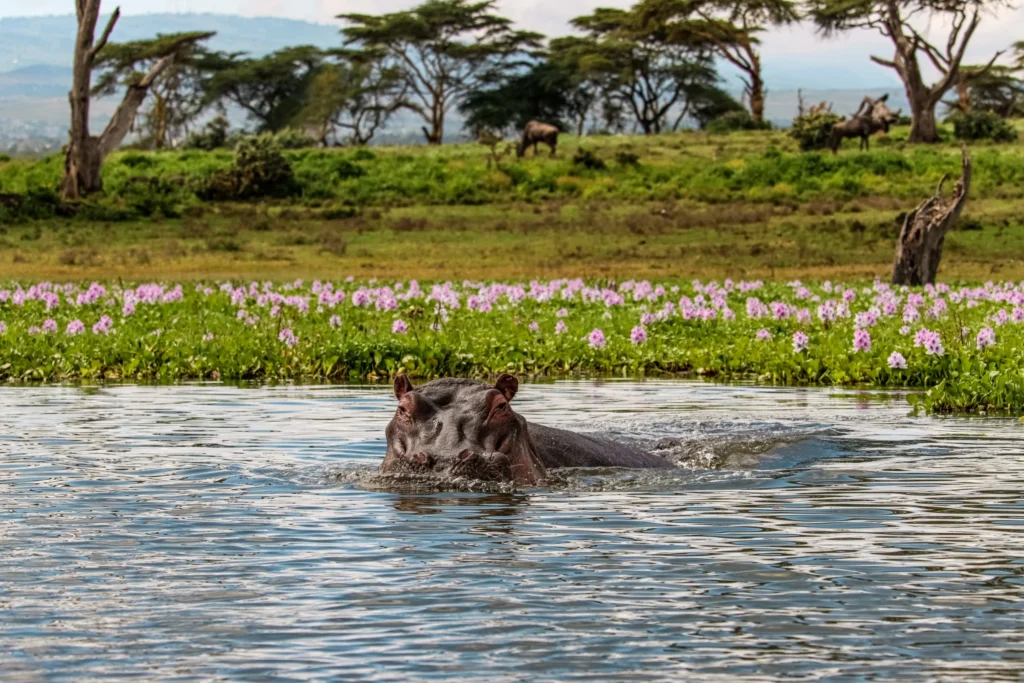
Hippos here are dangerous, especially in shallow sections near the reeds.
Good local guides matter, both for safety and for understanding how quickly conditions can change once the wind builds later in the day.
The Maasai originally called this place Nai’posha, meaning “rough waters”, and the lake still earns that name.
Birdlife is one of the biggest reasons people keep coming back.
More than 400 species have been recorded around the lake and its wetlands, including African fish eagles, pelicans, kingfishers, jacanas, cormorants, and several species of herons.
The strongest bird activity usually happens between October and April, when migratory species arrive from Europe and northern Africa after the short rains turn the shoreline greener and food becomes more abundant.
Flamingos sometimes move through the wider Rift Valley lake system during this period too, although the largest concentrations are usually further north around Lake Nakuru.
And one way or another, the lake keeps changing with the seasons.
Greener after the rains. Rougher when the wind arrives. Louder when migratory birds return. Wildlife shifts with it, and every visit feels slightly different from the last.
By the time the water starts turning grey later in the afternoon, most people realise one night around Naivasha was never really enough.
Above the lake: Naivasha’s volcanic trails
Naivasha is not only about the lake.
The volcanic terrain around it makes some of the best day hikes near Nairobi possible, and a few of them earn their reputation properly.
Mount Longonot National Park is the obvious one.
You see the volcano from far away, sitting alone above the Rift Valley floor.
The climb starts gently, then quickly turns steep.
The full hike and crater rim loop usually covers around 13 to 14 kilometres with roughly 700 to 900 metres of elevation gain depending on the route taken.
Loose volcanic dust, exposed sections with almost no shade, and heat that builds fast once the sun rises higher make the trail feel tougher than the numbers suggest.
Most people take between 4 and 6 hours to complete the full circuit.
Start early, earlier than you think. By midday, Longonot becomes much harsher.
The crater rim loop especially drains people more than expected, both physically and mentally.
But once you reach the top, the reward makes sense immediately.
Forest fills the crater below, Rift Valley escarpments stretch across the horizon, and on clear mornings you can sometimes see Lake Naivasha shimmering in the distance.
Further north, the forests around Mount Eburru feel completely different. Cooler, greener, quieter. Less dramatic perhaps, but far fewer people and a more remote atmosphere.
Closer to the lake, the trails around Crater Lake Game Sanctuary are shorter and slower paced, especially in the late afternoon when the volcanic crater shifts colour with the changing light.
Horse riding around Naivasha offers another completely different way to experience the landscape.
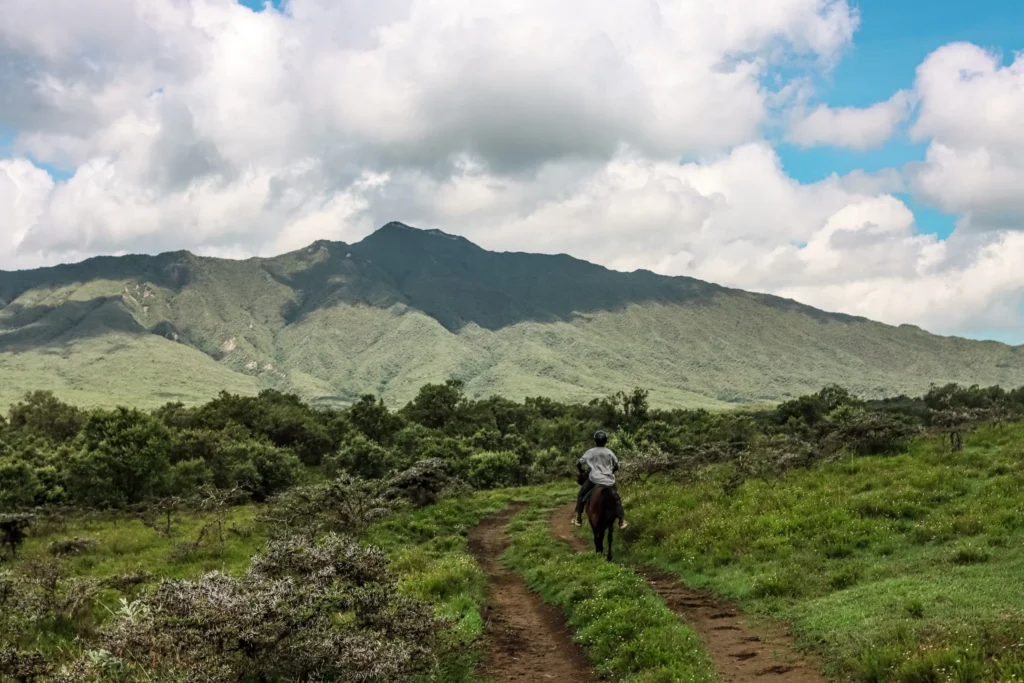
Riding beneath volcanic cliffs, across open Rift Valley terrain, and sometimes beside zebra or giraffe feels far quieter and more connected to the environment than driving through it.
Few places near Nairobi combine wildlife, volcanoes, and open riding scenery quite like this.
That’s the thing with Naivasha. One day you’re kayaking quietly beside hippos on the lake, the next you’re climbing a dusty volcano above the Rift Valley, legs burning while the same water stretches out below you.
What most people get wrong about Naivasha
A lot of people treat Naivasha like a quick stop on the way somewhere else.
One night, maybe a boat ride, then back to Nairobi or onward to the Mara.
That’s usually the mistake.
Naivasha changes completely depending on when you wake up, where you go, and how long you stay.
Season matters too.
Rainy months bring greener landscapes and dramatic skies across the Rift Valley, while dry season usually makes hiking easier around Mount Longonot National Park and nearby trails.
And not every experience around the lake feels the same.
Good local guides know when to slow things down instead of rushing through it.
They understand how weather shifts across the lake, where wildlife moves and how conditions around the lake shift through the day.
That’s why Naivasha rewards people who give it time. Stay an extra morning. Wake up early. Let the weather shift around you a bit. You’ll understand the place much better for it.
Why Naivasha keeps pulling people back
Maybe it’s the contrast that makes Naivasha hard to leave.
One moment you’re standing in silence beside the lake with mist still hanging above the water.
A few hours later, you’re covered in volcanic dust somewhere above the Rift Valley, looking down at the same shoreline from a crater rim.
Nothing around Naivasha stays the same for very long.
And somehow, all of it exists less than two hours from Nairobi.
That’s what makes Naivasha hard to replace.
You do not need a long safari circuit to feel properly outside.
You can come for a weekend and still leave feeling like you experienced several completely different landscapes at once.
Naivasha doesn’t try too hard to impress you. It just keeps giving you reasons to stay longer.