

Amboseli and the Aberdares might both be Kenyan national parks, but they feel like completely different worlds.
One is open, dusty, and cinematic beneath Kilimanjaro.
The other hides inside foggy forests, waterfalls, bamboo valleys, and colder mountain wilderness.
Two completely different versions of Kenya
Choosing between Amboseli and the Aberdares is not really about which park is “better”. It depends on what kind of Kenya you want to experience.
Amboseli is the Kenya most people imagine before arriving.
Open plains, huge elephant herds moving beneath Mount Kilimanjaro, dusty sunsets, and long cinematic game drives across dry savannah.
The Aberdares feel almost like another country entirely.
Fog moves through bamboo forests, waterfalls disappear into deep valleys, temperatures drop with altitude, and wildlife stays hidden inside thick forest instead of standing out on open plains.
One park feels vast, open, and iconic. The other feels colder, rougher, and far more unpredictable.
And honestly, that contrast is exactly what makes choosing between them so interesting.
Amboseli: Kenya’s most iconic elephant landscape
Amboseli National Park sits in southern Kenya near the Tanzanian border, roughly 4 to 5 hours by road from Nairobi depending on traffic and the route taken.
The park is not especially large compared to places like Tsavo, but what makes Amboseli famous is the scale of its scenery.
Open dusty plains stretch toward Mount Kilimanjaro, whose snow-covered summit rises behind the park on clearer mornings, creating some of the most recognisable safari views anywhere in Africa.
This is classic safari Kenya.
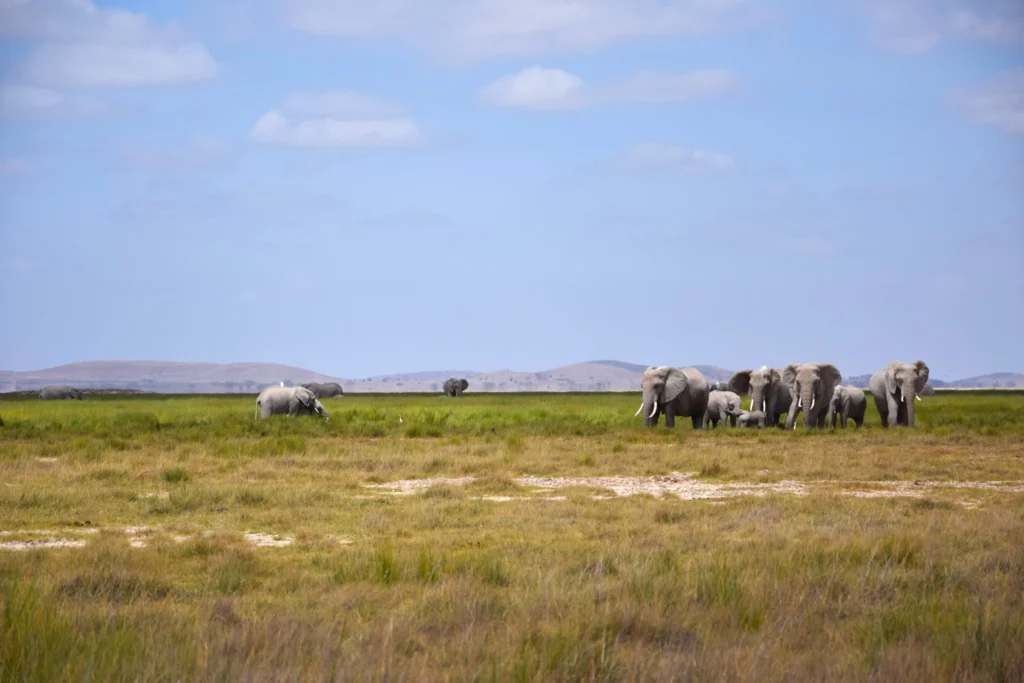
Wildlife in Amboseli is far easier to spot than in forest parks like the Aberdares because the landscape stays open almost everywhere.
The park is especially known for its huge elephant herds, many carrying some of the largest tusks left in East Africa.
Lions, cheetahs, hyenas, giraffes, zebras, wildebeest, buffalo, and hundreds of bird species also move through the swamps and dry plains surrounding the mountain.
Game drives are the main activity here, especially sunrise and late afternoon drives when temperatures cool slightly and wildlife becomes more active.
But Amboseli also offers cultural visits to Maasai villages, birdwatching around the marshlands, photography-focused safaris, hot air balloon experiences nearby, and camping inside or around the park.
Nights are usually dry and warmer, the landscape stays open around you, and the atmosphere feels more traditionally “African safari” than mountain wilderness.
Several public campsites and luxury tented camps sit close to wildlife movement corridors, where elephants and hyenas sometimes pass surprisingly near camp after dark.
But Amboseli has limitations too.
The park can feel crowded during peak season, especially around popular elephant sightings and Kilimanjaro viewpoints .
Dry season dust becomes intense, particularly between June and October, and visibility of Mount Kilimanjaro is never guaranteed despite what many photos online suggest.
Some travellers also find the scenery repetitive after several full days because much of the park remains relatively flat and open compared to more diverse landscapes elsewhere in Kenya.
Still, few places in Africa deliver wildlife and scenery together as consistently as Amboseli does.
Amboseli National Park entry fees in 2026 currently stand at around KES 1,000 for East African adult citizens, KES 2,000 for Kenya residents, and roughly USD 100 for international adult visitors, with reduced rates applying for children.
Vehicle fees, camping fees, guides, and additional activities are charged separately, and updated prices can always be checked through the official Kenya Wildlife Service website.
The Aberdares: Kenya’s hidden highland wilderness
The Aberdares feel almost like the opposite of Amboseli.
Instead of open plains and endless visibility, the landscape closes around you quickly.
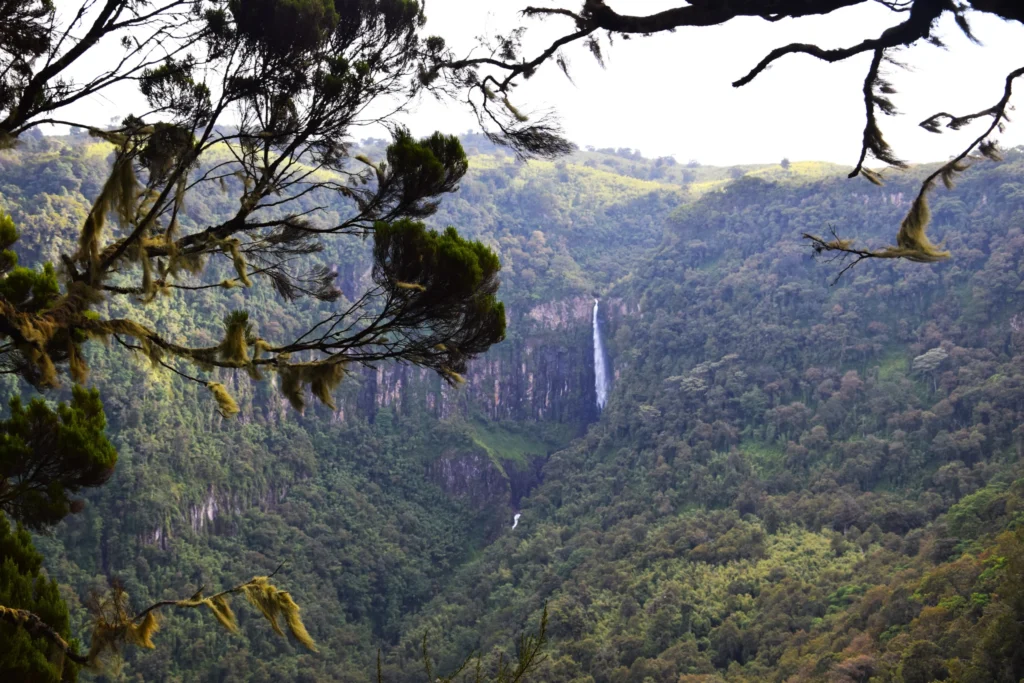
Roads disappear into bamboo forest, waterfalls crash through deep valleys, fog rolls across the mountain slopes without warning, and wildlife often stays hidden somewhere beyond the trees instead of standing clearly out on the horizon.
Set between roughly 2,000 and 4,000 metres above sea level, the Aberdare Range forms one of Kenya’s coldest and wettest national parks.
Temperatures drop fast once rain and mist move through the forest, especially at higher elevations, and weather changes much more unpredictably than in southern safari parks like Amboseli.
This is a completely different version of what people usually imagine as a “Kenyan safari.”
The Aberdares are more atmospheric, rougher around the edges, and far more immersive.
Wildlife here feels experienced through movement, sound, and atmosphere as much as direct sightings.
Forest elephants move through bamboo corridors, buffalo appear suddenly beside muddy tracks, black rhinos still survive inside protected sections of the park, colobus monkeys disappear high into the canopy, and rare mountain bongos still move through deeper forest areas.
The park especially rewards people who enjoy hiking, camping, photography, birdwatching, trout fishing, forest scenery, and slower exploration rather than only traditional game drives.
Multi-day hikes around Elephant Hill, Mount Satima, Ragia Forest, and the Table Mountains have also turned the Aberdares into one of Kenya’s strongest adventure destinations outside the normal safari circuit.
But the Aberdares demand more preparation too.
Roads become muddy quickly after rain, visibility can disappear entirely inside the forest, temperatures feel surprisingly cold at night, and wildlife is often harder to spot than in open savannah parks.
For some visitors, that makes the experience frustrating. For others, it is exactly what makes the landscape unforgettable.
Camping here feels far wilder than in Amboseli.
Nights are colder, forests feel more enclosed, and the atmosphere becomes extremely quiet once darkness settles through the trees.
In some remote sections, armed ranger support is required for hiking and camping activities because of the wildlife moving through the forest.
Aberdare National Park entry fees in 2026 currently stand at around KES 800 for East African adult citizens, KES 1,100 for Kenya residents, and roughly USD 70 for international adult visitors, with reduced rates applying for children.
Vehicle fees, camping fees, guides, and additional activities are charged separately, and updated prices can always be checked through the official Kenya Wildlife Service website.
That is what separates the Aberdares from most safari destinations in Kenya.
The park does not always reveal itself easily. You experience it slowly, through weather, silence, forest atmosphere, and landscapes that feel hidden far longer than they probably should.
So, which one actually feels right for you?
Choose Amboseli if the safari you imagine looks cinematic in your head.
Huge elephant herds crossing open plains beneath Kilimanjaro, easier wildlife sightings, dramatic photography,
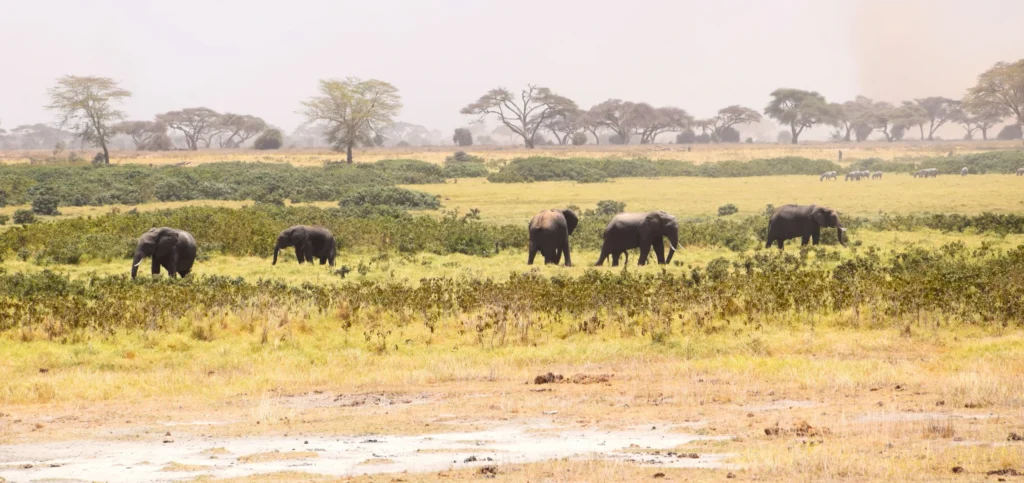
Maasai culture, and the kind of landscapes that immediately feel like Africa the moment you arrive.
It is also usually the easier park for first-time safari travellers and families because wildlife viewing feels more immediate and accessible.
Choose the Aberdares if you want something wilder, colder, and far less predictable.
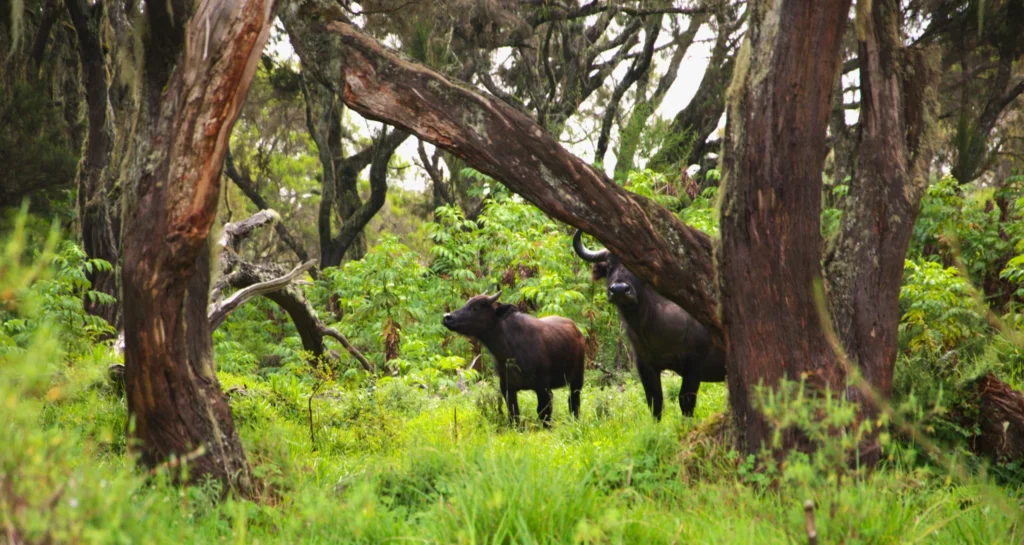
A place where fog moves through bamboo forests, waterfalls hide inside valleys, hikes replace long game drives, and the atmosphere matters just as much as the wildlife itself.
The park usually appeals more to travellers looking for adventure, hiking, forest scenery, camping, and a side of Kenya that feels far more hidden from the traditional safari circuit.
Even the accommodation experience feels different between the two.
Amboseli leans more toward open safari camps and lodges overlooking the plains, while the Aberdares are known for forest lodges, mountain camps, and historic tree hotels hidden deep inside the landscape.
Amboseli gives you Kenya at its most iconic.
The Aberdares give you unforgettable adventures inside a side of Kenya many travellers never expect exists at all.
Not two parks. Two different worlds.
Amboseli gives you the Kenya most people imagine before arriving. Elephant herds crossing dusty plains beneath Kilimanjaro, golden light over open savannah, and the kind of safari scenery that feels instantly iconic.
The Aberdares show you a completely different side of the country. Colder, wetter, hidden inside forests and fog, where waterfalls disappear into valleys and the wilderness feels far rougher and less predictable.
And honestly, that contrast is what makes choosing between them so difficult.
They are not two versions of the same safari. They are two completely different ways of experiencing Kenya itself.
That’s the real question: Do you want the classic Amboseli safari beneath Kilimanjaro, the colder adventure hidden inside the Aberdare forests, or enough time in Kenya to experience both?