
Crescent Island Walking Safari: Fees, How to Get There & What to Expect
Crescent Island is the closest thing Kenya has to a safari without a vehicle. There are no lions, no leopards…

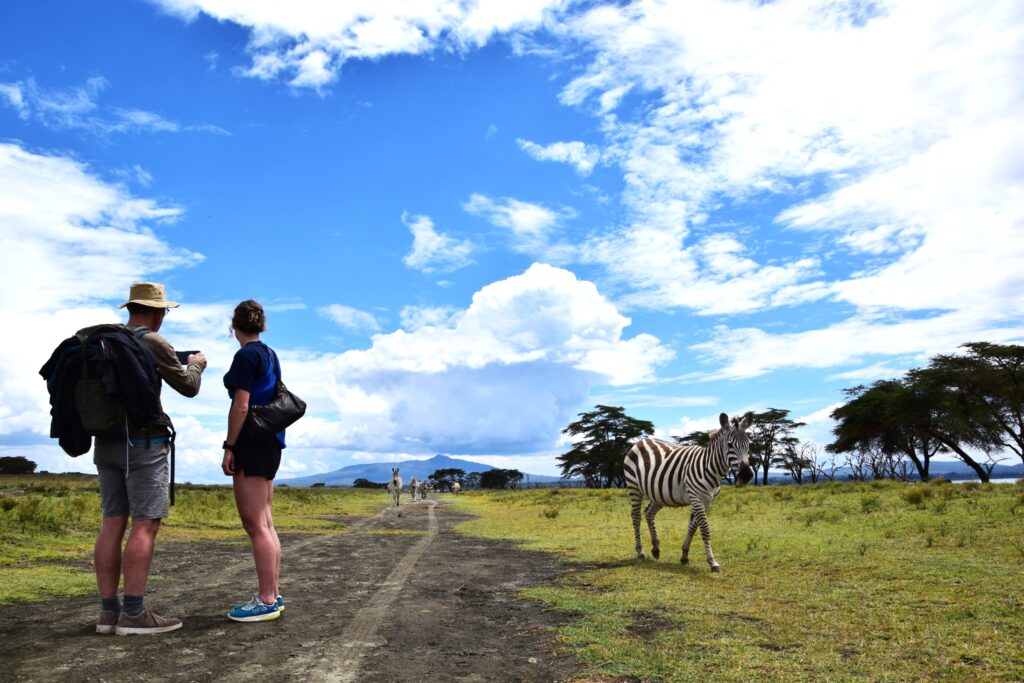
Crescent Island is the closest thing Kenya has to a safari without a vehicle. There are no lions, no leopards and no fences, so you walk straight past giraffe, zebra and wildebeest on foot with nothing but a guide and open grassland between you. A Crescent Island walking safari is easy to add onto a Lake Naivasha trip, but the logistics work differently from a KWS park, so it helps to know the current fees, the boat situation and what you’ll actually see before you go.
Crescent Island Entrance Fee 2026
Crescent Island is privately owned and sets its own rates, published directly by the sanctuary for the 2026 calendar year (valid January 1 to December 31, 2026):
| Category | Adult | Student | Child |
|---|---|---|---|
| Non-Resident | $33 | $22 | $16 |
| Kenya Resident (with ID) | KES 1,100 | N/A | KES 550 |
| Kenya Citizen (with ID) | KES 800 | N/A | KES 400 |
Children are charged the child rate from age 5 to 15. Kenya residents and citizens need to show proof of ID to qualify for the local rate, and the sanctuary accepts cash in USD, KES or GBP, plus M-Pesa and most credit cards (American Express is the exception).
A few details make Crescent Island walking safari different from a national park booking. Payment is made on arrival at the island, not to your boat operator, so don’t hand over the entrance fee before you dock. Guides are available on a first come first serve basis and there’s no extra charge to use one, though a tip is appreciated if you enjoyed the walk. Dogs aren’t allowed, and school groups need to pre-book by email with a cap of 45 children, Monday to Friday only.
Rates are subject to change with currency fluctuations, so it’s worth a quick check with the sanctuary directly if you’re booking a group or planning a trip further out.
Group and School Rates
Local school groups get a separate, heavily discounted rate: KES 250 per primary pupil, KES 350 per secondary student, KES 400 per university student and KES 450 per accompanying teacher, plus a flat KES 500 guide fee per group. School visits are capped at 45 children, must be pre-booked by email and only run Monday to Friday. Photographers and filmmakers pay separately too: a standard photo shoot runs from KES 5,000 to KES 15,000, while commercial filming fees are quoted directly by the sanctuary on request.
How to Get to Crescent Island
Here’s the part that catches a lot of visitors out. Crescent Island sits on the eastern side of Lake Naivasha and technically it’s a peninsula rather than a true island, connected to the mainland by a strip of land that has, at times, allowed vehicle access via a causeway. As of 2026, the sanctuary states it’s currently accessible by boat only, so plan on a water crossing rather than a drive across the causeway.
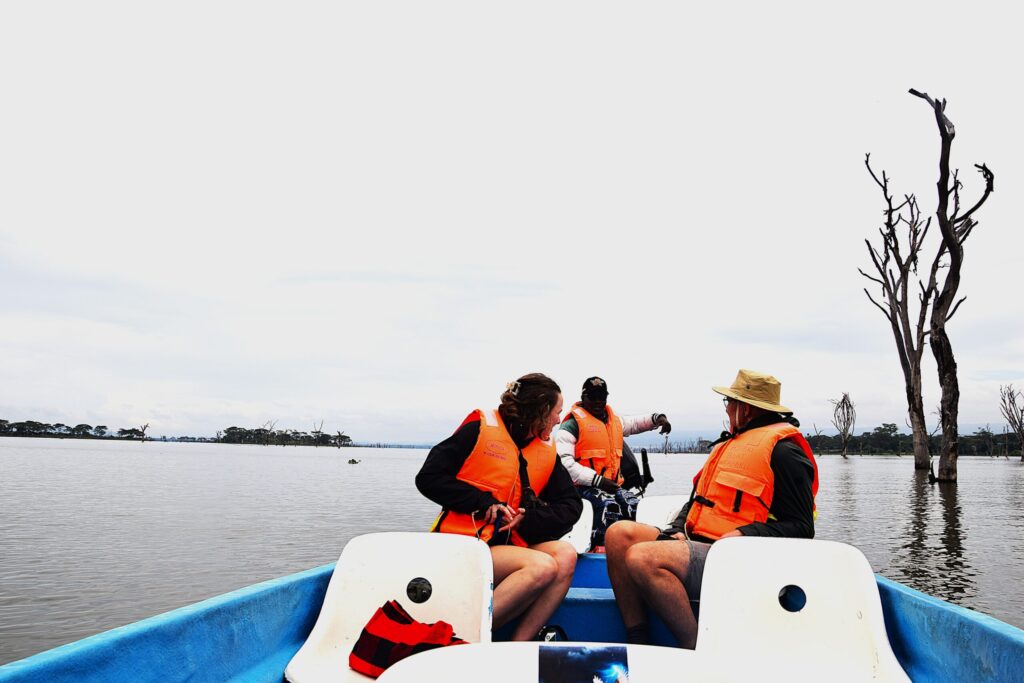
Boat transfers leave from several points around the lake, and pricing is charged per boat rather than per person, with most boats holding a maximum of seven passengers on a return trip. Operators near the public beach at Karagita tend to be the shortest crossing, roughly 15 to 20 minutes each way, while transfers from camps further around the lake, like Fisherman’s Camp or Camp Carnelley’s, run closer to 45 minutes each way. Lake Naivasha Sopa Lodge runs its own boat and charges per person rather than per boat, which suits solo travelers or couples better than the flat per-boat rate.
Whichever operator you use, the boat fee only covers the transfer. You still pay the island’s entrance fee separately once you arrive at the jetty, where a uniformed guide will meet you at the sanctuary’s signpost.
Crescent Island Boat Ride Pricing
Boat charges vary by operator and distance, and because they’re priced per boat rather than per head, splitting the cost across a group brings the per-person price down fast:
- Closer operators (Karagita area): roughly KES 2,500 to KES 3,000 per boat, return
- Lodge-based operators (LNC Club, Sawela Lodge): roughly KES 5,000 per boat, return
- Longer transfers (Fisherman’s Camp, Camp Carnelley’s): roughly KES 8,000 to KES 10,000 per boat, return, reflecting the extra 45-minute crossing
- Lake Naivasha Sopa Lodge: priced per person, around $40 for adults and $20 for children
For a group of four or five sharing a standard boat, the per-person transfer cost often works out cheaper than the island’s own entrance fee, which is worth factoring in if you’re planning a full day on Lake Naivasha rather than just the walking safari.
What Animals You’ll See
Crescent Island holds one of the highest concentrations of game per acre of anywhere in Kenya, with more than 1,600 head of game recorded across the peninsula. What makes the walking safari possible is simple: there are no predators. No lions, no leopards, no hyenas resident on the island, which means you can walk the open trails on foot with a guide instead of staying inside a vehicle.
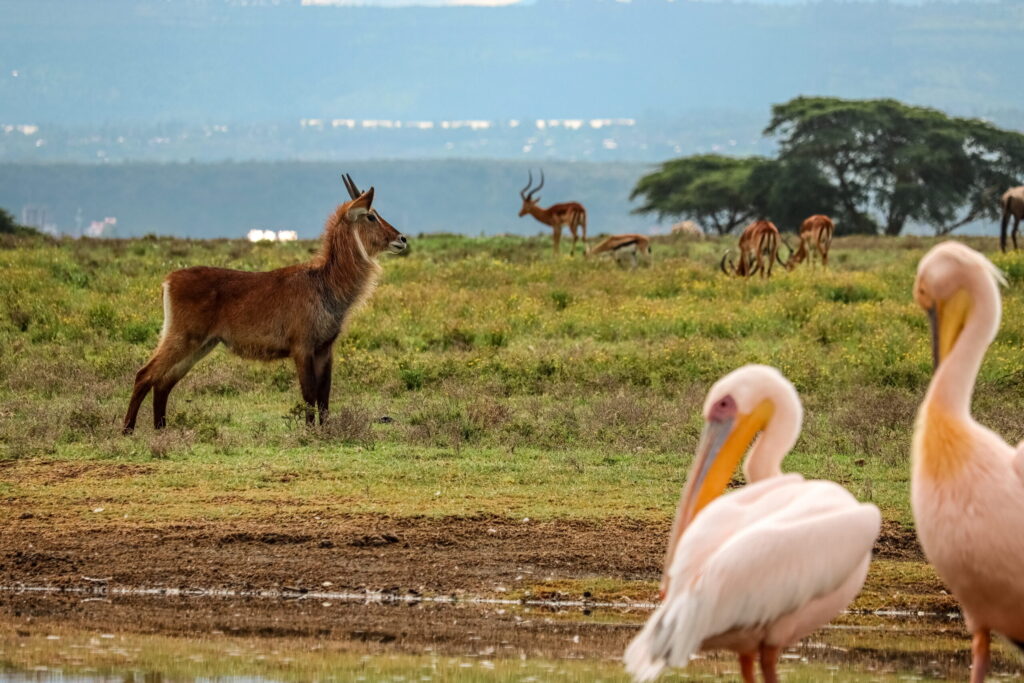
On a typical walk you’ll come across giraffe grazing acacia trees at close range, zebra and wildebeest moving in loose herds across the grassland, along with waterbuck, impala and eland grazing near the shoreline. Female giraffe born on the island are known to return here to give birth themselves, so it’s not unusual to see three generations of the same family grazing together. Hippos live in the surrounding lake rather than on the island itself, though they sometimes come ashore to graze after dark, which is why all visitors are required to leave before sunset. Hyena occasionally cross over to hunt at night but aren’t resident on the island, so daytime walks stay predator-free. Birdlife is just as strong a draw, with over 200 recorded species including fish eagles, pelicans, cormorants and herons along the papyrus-lined shore.
Because the terrain is flat and the trails are well worn, walking here is genuinely relaxed rather than strenuous, and it works for families and less mobile visitors who wouldn’t attempt a longer hike elsewhere in the Rift Valley.
A Private Sanctuary, Not a National Park
Unlike Hell’s Gate or Lake Nakuru, Crescent Island isn’t managed by Kenya Wildlife Service. It’s privately owned and run as a working sanctuary, with on-site accommodation, a small café and its own management setting the rules, hours and fees independently of KWS policy. That’s part of why the fee structure looks different from a gazetted park fee schedule, and why bookings, group rates and photo or filming fees are all negotiated directly with the sanctuary rather than through eCitizen.
In practice, this means a more informal and personal visit. There’s no ticket gate or turnstile, just a jetty, a signpost and a guide waiting to meet your boat. The sanctuary also runs a handful of named cottages on the island itself, along with the Island Fever Café for a post-walk drink or snack, both run directly by the same private management rather than an outside concessionaire. It also means the island can adjust access, such as the current boat-only policy, without going through the kind of regulatory process a KWS park would.
Out of Africa Filming History
Crescent Island has a claim to cinematic fame. The peninsula served as one of the filming locations for the 1985 Oscar-winning film Out of Africa, starring Meryl Streep and Robert Redford, and the crew brought in a number of the plains animals used to populate the landscape for the shoot. Those introduced herds became the foundation of the resident wildlife population that visitors still walk among today, which is part of why the island’s game density feels so unusually high for its size.
What to Expect on Your Walking Safari
Plan for a half day rather than a quick stop. Between the boat transfer, the walk itself and time to enjoy the views back across the lake toward Mount Longonot, most visitors spend two to three hours on the island. Early morning departures, around 7 to 8 AM, or late afternoon around 3:30 PM tend to bring the coolest weather and the most active wildlife, and those windows also line up with the best light for photography.
Wear comfortable walking shoes, bring water and sun protection, and pack a light rain layer if you’re visiting outside the dry months of July to October or January to March. Because there are no fences and no predators, walks stay relaxed, but guides still ask visitors to keep a respectful distance from giraffe and buffalo and to avoid feeding any of the wildlife.
Planning Your Visit
A Crescent Island walking safari pairs naturally with the rest of a Lake Naivasha itinerary. For help putting together transport, boat transfers and a guided walk in one booking, see our Crescent Island safari package. If you’re building out a longer trip around the lake, our complete Naivasha guide for 2026 covers where to stay and what else to fit into your visit, and if you’re traveling on a budget, our roundup of affordable camping sites near Lake Naivasha is worth a look before you book accommodation.
Fees and boat access can shift with the seasons and currency swings, so confirm current rates directly with the sanctuary or your boat operator shortly before you travel.
Plan your trip
Ready to plan your Kenya trip?
We plan every Kenya trip from scratch, with honest pricing.