

Kilimanjaro vs Mount Kenya: which climb is right for you?
Kilimanjaro vs Mount Kenya is not a simple bigger-or-smaller choice. Kilimanjaro is higher, more famous and more direct. Mount Kenya is quieter, sharper underfoot and more varied once you are inside the mountain. If you want the tallest walkable summit in Africa, Kilimanjaro makes sense. If you want a Kenyan mountain with fewer people, rougher beauty and a real alpine feel, Mount Kenya is the better call.
The honest answer depends on what you want from the climb. Some travellers want the name. Some want the landscape. Some want a hard thing that still feels personal. Both mountains can give you a serious week at altitude. They just give it in very different ways.
Kilimanjaro vs Mount Kenya: the short verdict
Choose Kilimanjaro if your heart is set on standing at 5,895 m on Uhuru Peak. It is the highest point in Africa and that matters to many climbers. There is nothing wrong with wanting the big one. It is a clean goal, easy to explain and hard enough to feel earned.
Choose Mount Kenya if you care more about the experience than the name. Point Lenana is lower at 4,985 m according to Kenya Wildlife Service. The mountain itself feels wilder. You move through forest, moorland, alpine lakes and high rocky basins. Batian and Nelion sit above you like proper alpine towers. The summit matters. The mountain around it carries the trip.
For most Daring Escapes travellers, Mount Kenya is the smarter fit. They are already coming to Kenya, they want a private guided trip and they prefer a climb that feels personal rather than crowded. The mountain still tests you. It just gives you more silence between the hard bits.
Height: Kilimanjaro is higher, Mount Kenya feels sharper
Kilimanjaro’s summit, Uhuru Peak, is listed by Kilimanjaro National Park at 5,895 m. That makes it Africa’s highest point. Mount Kenya’s highest peak is Batian at 5,199 m, followed by Nelion at 5,188 m and Point Lenana at 4,985 m according to Kenya Wildlife Service.
Most people miss the summit distinction. Most trekkers on Mount Kenya are not climbing Batian or Nelion. Those are technical rock climbs. When travellers say they are climbing Mount Kenya, they usually mean Point Lenana. It is the trekking summit and it does not require ropes on the standard routes.
So yes, Kilimanjaro wins on height. No argument. But height is not the only way a mountain becomes difficult. Mount Kenya has rougher trails, colder camps and a summit morning that can feel steeper and more broken underfoot. Kilimanjaro is higher for longer. Mount Kenya is more varied step to step.
Kilimanjaro vs Mount Kenya difficulty: altitude vs terrain
Kilimanjaro’s main difficulty is altitude. The walking is not technical on standard routes but 5,895 m is serious height. A fit person can still struggle if the pace is too fast or the route is too short. The mountain punishes impatience. That is why good guiding matters so much.
Mount Kenya’s Point Lenana is lower but the terrain asks more from your legs. The trails can be rocky, wet, steep and cold near the summit. On our 4-day Sirimon-Chogoria trek, the route reaches Point Lenana and crosses from the gentler Sirimon side to the Chogoria side. On our 5-day Chogoria-Sirimon climb, the extra day gives the body more time to settle before the summit push.
If you are asking which is harder, the neat answer is this: Kilimanjaro is harder for altitude. Mount Kenya can feel harder underfoot. Batian and Nelion are harder than normal Kilimanjaro trekking because they are technical climbs. Point Lenana is the fair comparison for trekkers.
Decision path
Start with the experience you want
I want Africa’s highest point
Choose Kilimanjaro
The summit name and 5,895 m goal matter most. Prepare for altitude and choose enough days to acclimatise.
I want quieter trails and varied scenery
Choose Point Lenana
Mount Kenya gives you tarns, valleys, giant lobelias and a rougher alpine trail at a lower summit height.
I want a technical mountain
Look at Batian or Nelion
These are specialist rock climbs. They are not trekking alternatives to Point Lenana or normal Kilimanjaro routes.
Scenery: Kilimanjaro is grand, Mount Kenya is more textured
Kilimanjaro has huge scale. The mountain rises alone and the route moves through clear vegetation bands, from lower forest to moorland, alpine desert and summit slopes. It feels like a long, steady climb through layers of altitude.
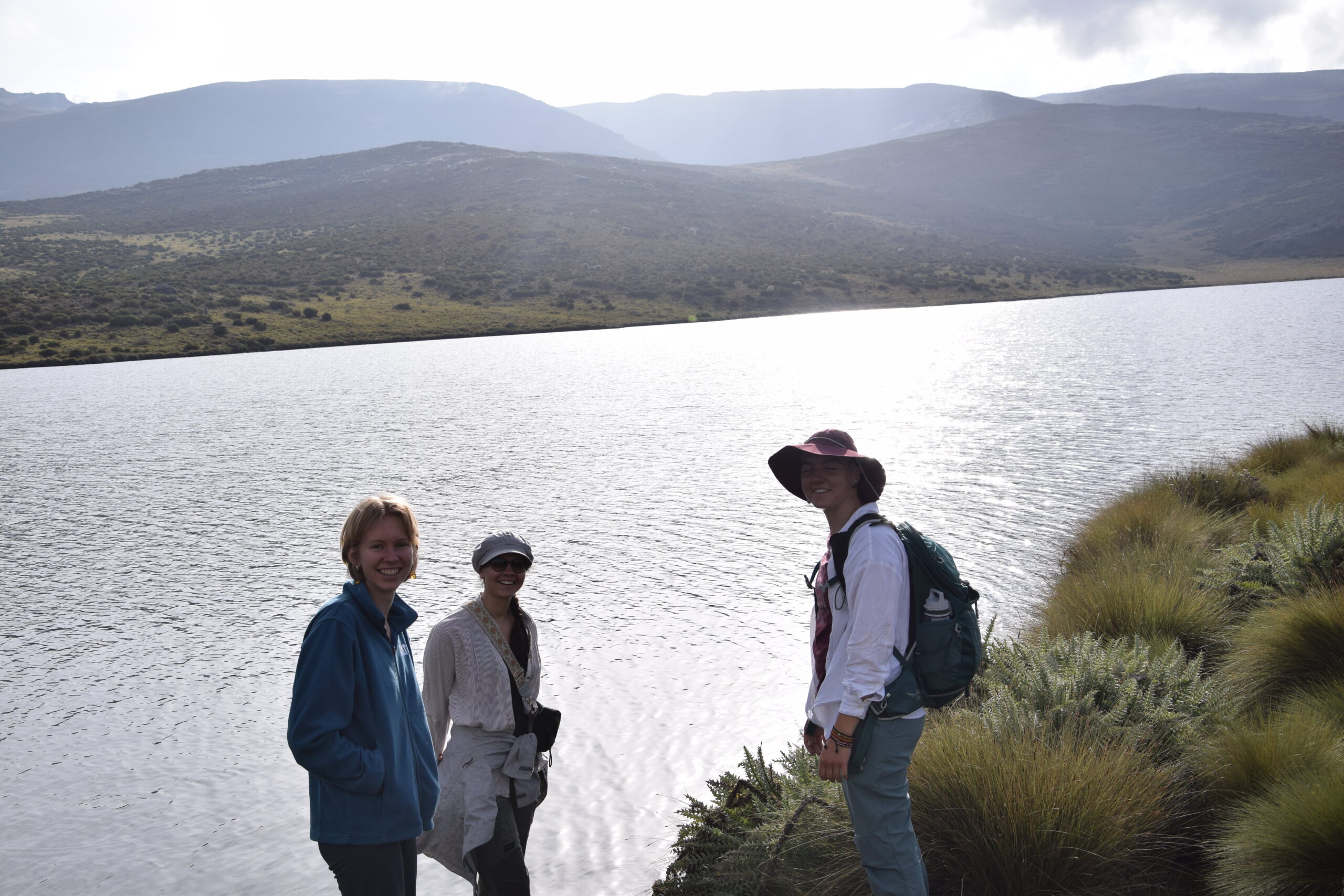
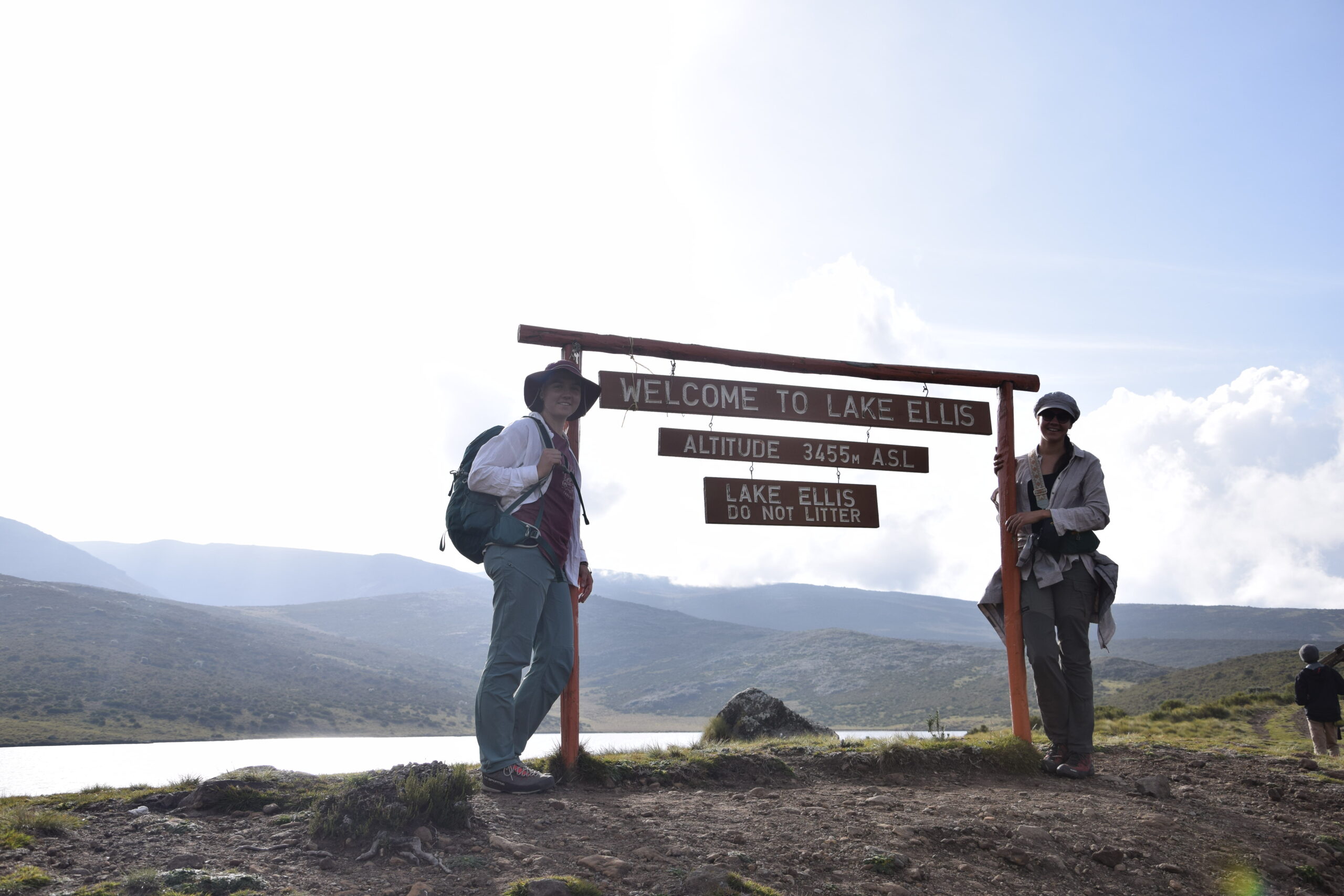
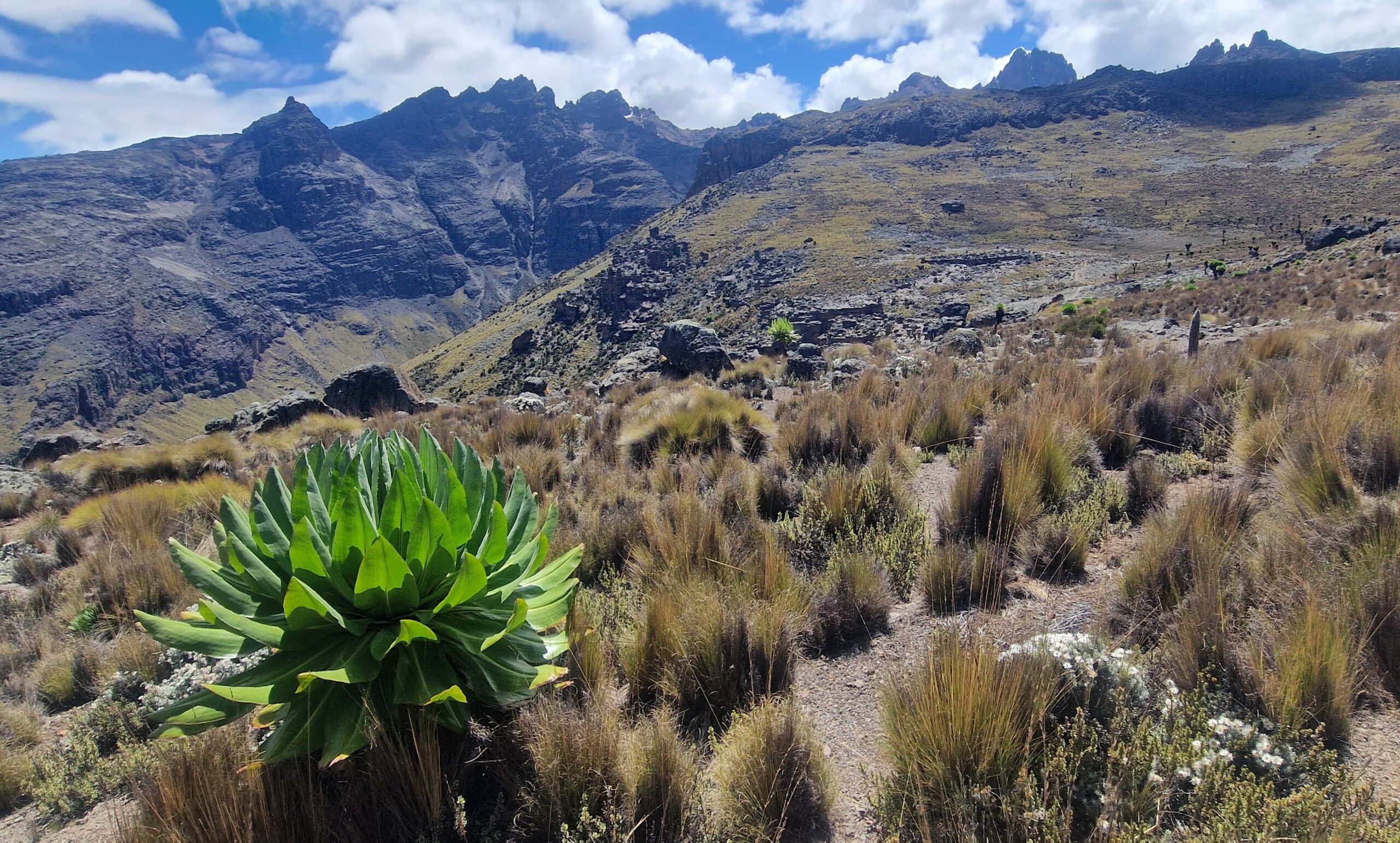
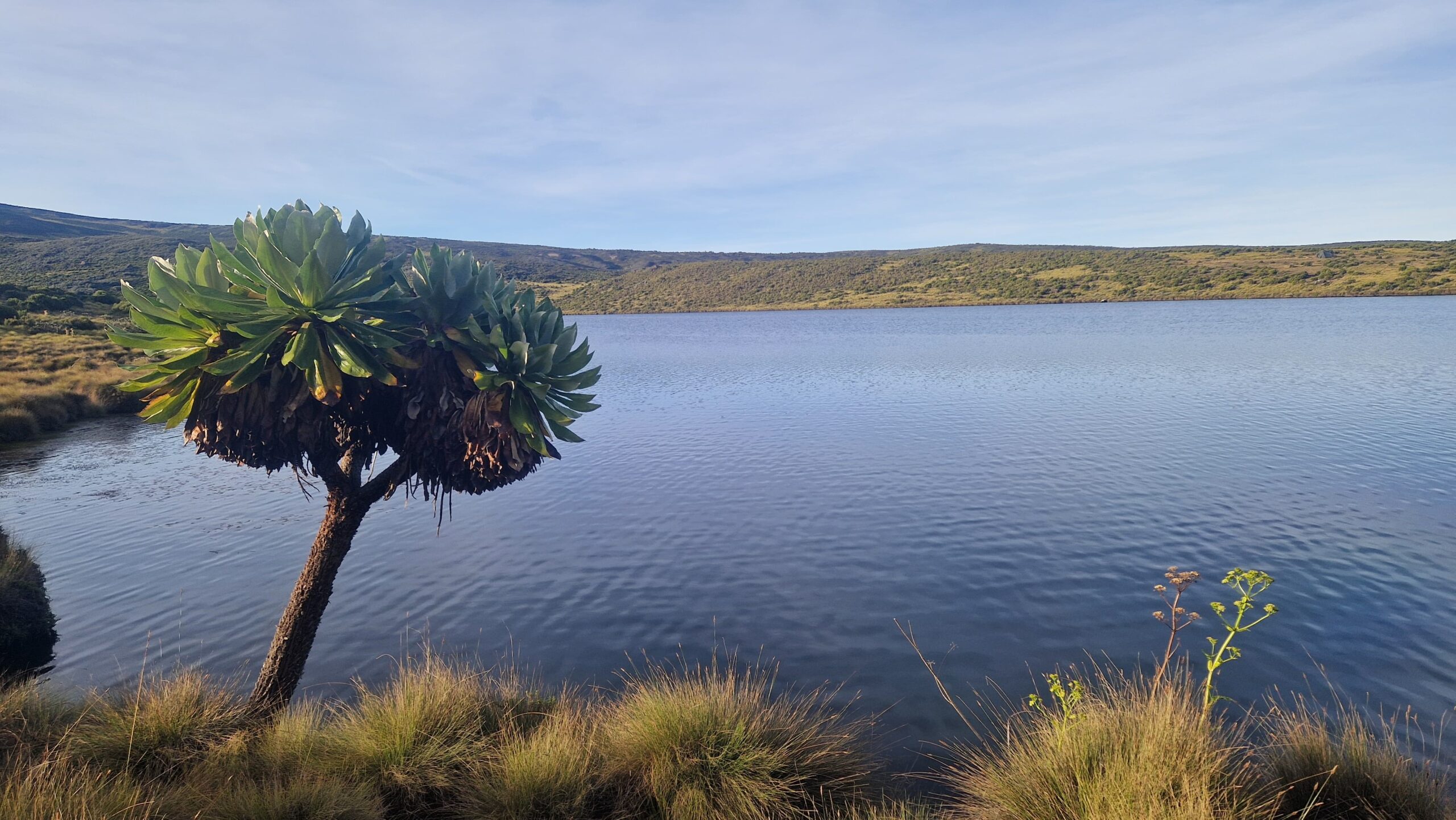
Mount Kenya is messier in a good way. The mountain has tarns, ridges, deep valleys, giant lobelias and dark volcanic rock. On the Chogoria side you get Lake Ellis, Lake Michaelson, Nithi Falls and the Gorges Valley. On the Sirimon side the climb is more gradual with wide moorland views and a friendlier ascent profile. The two sides feel different enough that a traverse is worth it.
This is where Mount Kenya wins for us. Kilimanjaro gives you one huge summit story. Mount Kenya gives you smaller scenes that stay in your head: frost on the tent, lobelias at dawn, rock faces above Shipton’s Camp, hot tea after a cold summit walk and the relief of dropping into thicker air.
Crowds and atmosphere
Kilimanjaro is famous. That fame brings more climbers, bigger camp movement and a stronger expedition feel. Many travellers like that. You meet people from everywhere and there is a shared sense that everyone is moving toward the same big goal.
Mount Kenya feels more private. Even on popular routes, the mountain rarely has the same volume of trekkers. You can hear wind, birds, porters talking quietly and your own breathing. For travellers who do not want a conveyor-belt mountain, that matters.
This is also where a private guided Kenya trip works well. The pace can be read properly. If someone is tired, the guide sees it early. If the weather turns or someone loses appetite at altitude, the crew has a plan. That is not decoration. That is the system you are paying for: vetted guides, sensible provisioning, backup decisions and Nairobi support when needed.
Routes and pacing
Kilimanjaro has several trekking routes with different profiles. The choice affects acclimatisation, scenery and crowd levels. In broad terms, longer routes give the body more time to adjust.
Mount Kenya has five routes leading up toward Point Lenana: Sirimon, Chogoria, Naro Moru, Burguret and Timau. Sirimon, Chogoria and Naro Moru are the main ascent options. Burguret and Timau are quieter and more remote. For most international travellers, Sirimon and Chogoria give the best balance of access, scenery and pacing.
Our 4-day Mount Kenya trekking tour uses the Sirimon-Chogoria line. It climbs by the gentler Sirimon Valley and descends through the dramatic Chogoria side. Our 5-day Mount Kenya climb uses Chogoria-Sirimon, with more time around the lakes and a better acclimatisation rhythm before summit night. If your dates allow it, we prefer the 5-day pace for comfort.
That does not mean everyone needs the longer version. A strong hiker with prior altitude experience may enjoy the 4-day trek. A first-time high-altitude trekker usually benefits from the extra breathing room. The mountain does not care how tough your gym routine looks on paper. Altitude has a rude sense of humour.
Cost and value, without the usual nonsense
Kilimanjaro is usually the more expensive project once you factor in Tanzania logistics, park systems, crew requirements and the longer summit objective. Mount Kenya is often simpler to add to a Kenya trip because the mountain sits within reach of Nairobi and combines well with other Daring Escapes routes.
But the cheapest option is rarely the smartest mountain option. A climb involves route choice, food, water, camp setup, pacing, weather judgement, evacuation thinking and honest decisions when someone is not adapting well. Those systems matter more at altitude because small problems grow quickly when people are tired and cold.
We do not position Mount Kenya as a bargain substitute for Kilimanjaro. That sells the wrong idea. Mount Kenya is its own climb. It is Kenya’s high mountain, with its own routes, risks, guides and rhythm. The value is not that it is cheaper. The value is that it can be planned properly around your body, your dates and the kind of mountain experience you actually want.
Who should choose Kilimanjaro?
Choose Kilimanjaro if the summit name matters most. If you have dreamed of Uhuru Peak for years, go do that. You do not need to talk yourself out of a dream because another mountain has better scenery. The heart is not a spreadsheet, thank goodness.
Kilimanjaro also suits travellers who want a big international trekking atmosphere. The routes are well known, the goal is clear and the summit photo carries instant recognition. For climbers focused on a famous summit, that can be exactly right.
The tradeoff is that the climb can feel busier. You are joining a well-trodden mountain machine. That machine exists for a reason. It gets many people safely up and down. It just may not feel as intimate as Mount Kenya.
Who should choose Mount Kenya?
Choose Mount Kenya if you want a climb that feels more personal. It is best for travellers who like varied landscapes, quieter trails and a mountain that still has rough edges. If you are already visiting Kenya, it fits naturally into the trip without sending you across the border for a separate mountain project.
Mount Kenya is also a good choice for first-time high-altitude trekkers who want a serious test without going straight to 5,895 m. Point Lenana is high enough to demand respect. You still need fitness, warm gear, slow pacing and honest communication with your guide. But the lower summit gives many trekkers a more forgiving first experience at serious altitude.
If you later climb Kilimanjaro, Mount Kenya gives you useful altitude experience. If you never climb Kilimanjaro, you have still done one of East Africa’s finest mountain treks. Nobody sensible calls that a consolation prize.
Kilimanjaro vs Mount Kenya: which one would we recommend?
For a traveller already coming to Kenya, we would choose Mount Kenya first. Not because Kilimanjaro is overrated. It is not. Kilimanjaro is a serious mountain and a huge achievement. We recommend Mount Kenya because it gives more of what our travellers usually ask for: privacy, local guiding, strong scenery, flexible pacing and a climb that feels connected to the rest of the trip.
If your goal is Africa’s highest summit, choose Kilimanjaro and choose a route with enough days to acclimatise. If your goal is a beautiful, quieter climb with a real Kenyan perspective, choose Mount Kenya. If you want the best version of Mount Kenya, take enough time, pick the right route and go with a crew that knows when to push and when to slow down.
For route detail, start with our Best Mount Kenya Routes guide and our complete Mount Kenya climbing guide. If you want a private trek, see our 5-day Mount Kenya climb or the faster 4-day Mount Kenya trekking route.
FAQ: Kilimanjaro vs Mount Kenya
Is Mount Kenya harder than Kilimanjaro?
For normal trekking summits, Kilimanjaro is usually harder because Uhuru Peak is higher at 5,895 m. Mount Kenya’s Point Lenana is lower at 4,985 m but the trail can feel rougher and more alpine. Batian and Nelion on Mount Kenya are technical climbs and should not be compared with normal Kilimanjaro trekking routes.
Which is better for a first high-altitude climb?
Mount Kenya is often the better first step if you are already travelling in Kenya. Point Lenana still teaches you about altitude, cold mornings and slow pacing without taking you as high as Kilimanjaro. A 5-day Mount Kenya climb gives the best comfort margin.
Can beginners climb Mount Kenya?
Yes, fit beginners can trek to Point Lenana with the right guide, route and pace. They should train before the trip, carry proper warm layers and be honest about symptoms at altitude. Batian and Nelion are not beginner objectives.
Does Daring Escapes operate Kilimanjaro trips?
No. Daring Escapes operates private guided trips in Kenya, including Mount Kenya. We can help you decide whether Mount Kenya fits your plans but we do not sell Kilimanjaro climbs.
How many days should I choose for Mount Kenya?
Our Mount Kenya options are 4 days and 5 days. The 4-day trek suits strong hikers or travellers with tight dates. The 5-day climb gives better pacing, more time on the Chogoria side and a calmer approach to summit night.
Which mountain has better scenery?
Kilimanjaro has grand scale and the famous high summit. Mount Kenya has more varied close-up scenery: tarns, valleys, lobelias, cliffs and different route faces. If you want quiet and detail, Mount Kenya wins.
Plan it around your body, not the brochure
The right mountain is the one that fits your reason for climbing. Kilimanjaro gives you Africa’s highest point. Mount Kenya gives you a quieter Kenyan climb with proper altitude, strong scenery and less noise around the experience.
Not sure which one suits you? Get in touch and we will help you think through your dates, fitness, altitude experience and travel plans before you commit to a route.