
Kenya Wildlife Safari Beyond the Maasai Mara: Samburu, Amboseli, Tsavo and Laikipia
The Maasai Mara takes most of the safari attention. A Kenya wildlife safari north and east of it reaches animals…

The Maasai Mara takes most of the safari attention. A Kenya wildlife safari north and east of it reaches animals the Mara does not have. Samburu holds the Special Five, five species you will not find in the Mara. Amboseli runs its elephant herds under Kilimanjaro. Tsavo dusts its elephants red. Laikipia is where the last two northern white rhinos live.
A Kenya wildlife safari beyond the Maasai Mara
Most visitors head to the Mara for the wildebeest migration and leave with the same photos as everyone else in the queue. The parks in this guide trade that stampede for something quieter and more specific. Samburu has the Special Five. Amboseli has big elephant herds with Kilimanjaro behind them. Tsavo holds more than half of Kenya’s elephant population. Laikipia’s private conservancies protect the last northern white rhinos on earth.
Each park rewards a different kind of traveller. This guide covers what each one offers, what it costs to enter Amboseli, and how to plan a route that skips the Mara entirely.
Samburu National Reserve: home of the Special Five
Samburu sits in Kenya’s hot, dry north, about 350 kilometres from Nairobi. The reserve covers 165 square kilometres of semi-arid bushland along the Ewaso Nyiro River, which draws wildlife from across the region during dry season.
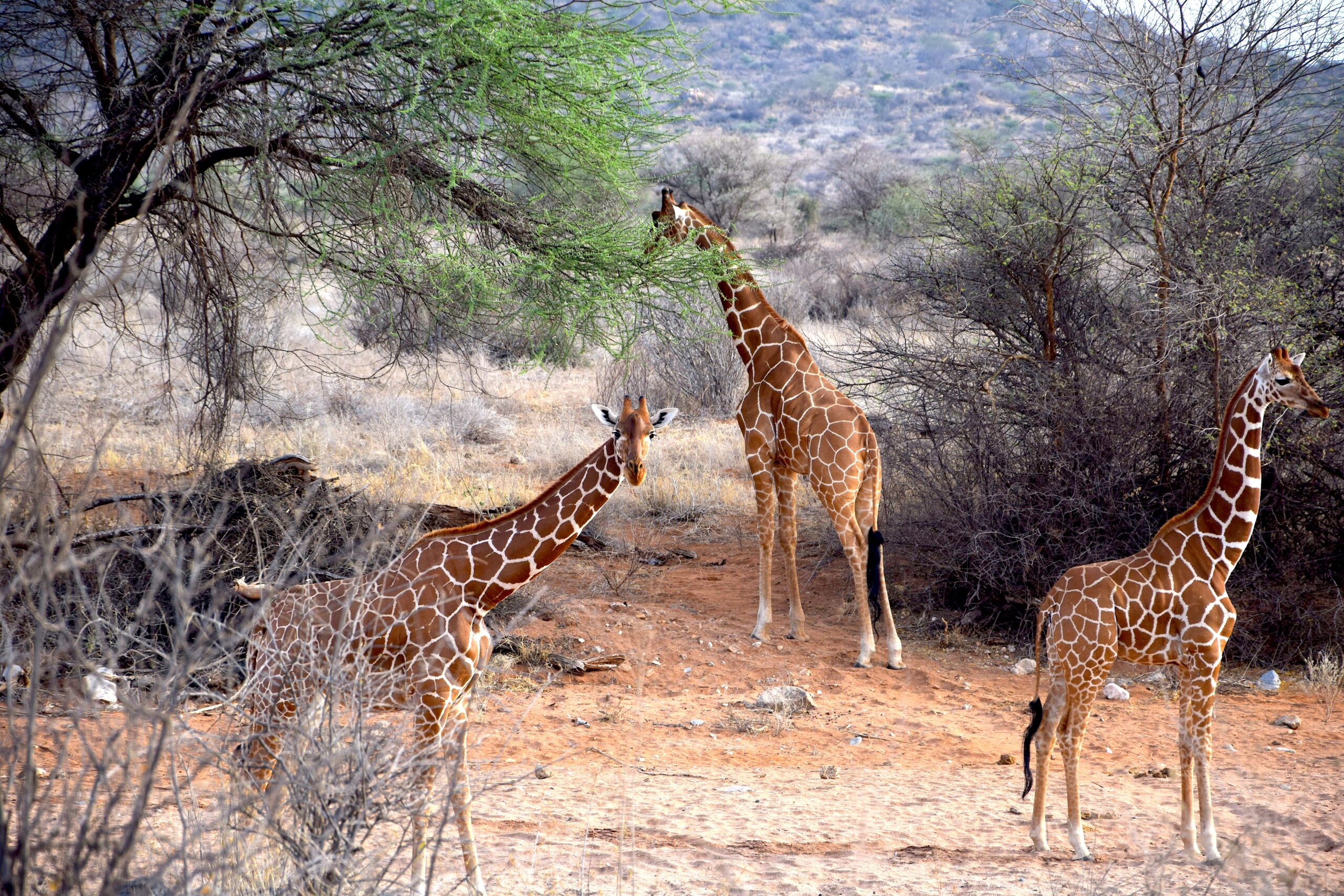
The reserve’s fame rests on the Special Five: Grevy’s zebra, reticulated giraffe, Somali ostrich, Beisa oryx and gerenuk. None of these species survives in the Mara. The gerenuk, which stands on its hind legs to feed on acacia trees, is one of the most striking animals you will see anywhere in Kenya.
Birdlife here runs to more than 450 recorded species, including the vulturine guineafowl, the largest of its family. Samburu also shares its western boundary with Buffalo Springs National Reserve and sits near Shaba National Reserve, so a single base covers three distinct habitats.
Samburu National Reserve is managed by Samburu County government, not Kenya Wildlife Service, so its entry fees sit outside the KWS tariff. Confirm the current rate with your operator before you book.
Our Samburu safari runs two days from Nairobi and pairs well with a longer northern route.
Amboseli National Park: elephants under Kilimanjaro
Amboseli sits 240 kilometres southeast of Nairobi at the foot of Kilimanjaro, just across the Tanzanian border. The park covers 392 square kilometres of open plains, acacia woodland and the dried lake bed that gives the park its dust devils.
Amboseli’s elephant herds are among the most studied in Africa, with family lines researchers have followed since the 1970s. Big tuskers move across the plains with Kilimanjaro’s snowline behind them, which makes for photographs no other park can match.
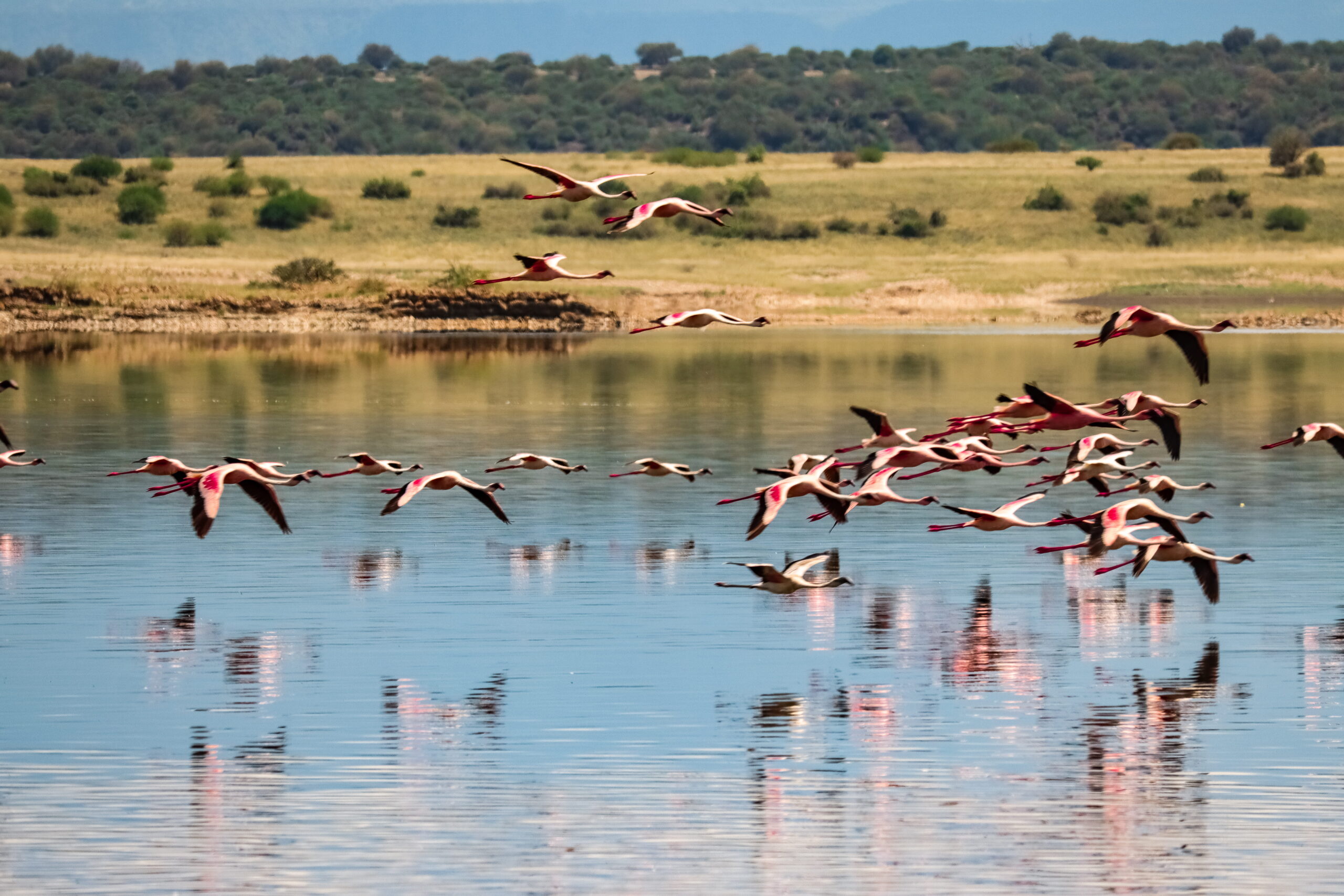
The park is also one of Kenya’s Important Bird Areas, with over 400 recorded species including 40 birds of prey. Flamingos gather in the seasonal lake basin when water levels suit them.
Park entry costs USD 90 per non-resident adult per day under the KWS tariff effective October 2025. Children pay less. Confirm the rate that applies to your group when you book.
Our Amboseli safari combines the park with a night at the foot of the mountain.
Tsavo National Park: Kenya’s red elephant country
Tsavo is Kenya’s largest national park, so big it is run as two: Tsavo East and Tsavo West. Together they cover about 22,000 square kilometres, most of Kenya’s total protected land. The park sits on the main Mombasa highway, which makes it the natural safari stop on a coast route.
Tsavo’s elephants are famous for their red colour, which comes from the park’s fine laterite soil. The herds dust themselves constantly, and against the pale dry grassland the effect is unmistakable.
Tsavo East’s open plains carry more than 500 bird species. Tsavo West adds volcanic scenery: the Mzima Springs, where hippos move past an underwater viewing hide, and the Shetani lava flow.
Tsavo entry fees follow the KWS tariff. Confirm current rates with your operator before you book.
Laikipia: private conservancies and the last northern white rhinos
Laikipia is a plateau county north of the Aberdare range, given over almost entirely to private and community conservancies. There is no single park gate. You book into a conservancy lodge and the conservancy’s guides take you out.
The region holds most of Kenya’s black rhino outside the national parks, and Ol Pejeta Conservancy cares for the last two northern white rhinos on the planet. Sanctuary rhino tracking, horseback and camel safaris, and night drives are all possible here in ways park rules do not allow.
Conservancy fees vary by property and usually fold into the lodge rate. Confirm what your chosen conservancy charges before you book.
Planning your Kenya wildlife safari
A route that skips the Mara is straightforward. Samburu and the northern reserves pair well with Laikipia conservancies on the drive south. Amboseli and Tsavo anchor a southern loop toward the coast. Two of the four destinations in this guide are KWS parks with published tariffs. The other two price differently, so always confirm fees before you travel.
For a deeper look at what makes the north special, read our guide to the Samburu Special Five. If you are weighing parks against each other, our Amboseli or Aberdares comparison breaks down the trade-offs. Our Kenya safari cost guide covers what you actually pay for, and the Kenya travel guide handles visas, timing and packing.
Not sure which park fits your dates and budget? Get in touch and we will help you plan a Kenya wildlife safari that skips the crowds entirely.
Plan your trip
Ready to plan your Kenya trip?
We plan every Kenya trip from scratch, with honest pricing.