
Samburu Safari Planning Guide: Fees, Tours and What to Expect
Planning a Samburu National Reserve safari starts with one detail: the reserve is run by the Samburu County Government, not…

Planning a Samburu National Reserve safari starts with one detail: the reserve is run by the Samburu County Government, not Kenya Wildlife Service.
Samburu sits in dry country in northern Kenya, on the northern bank of the Ewaso Nyiro River. It is a long drive north of Nairobi. Travellers who make it come for the elephants along the river and for the rare northern species this reserve is known for.
Who runs Samburu and how do entry fees work?
Samburu National Reserve is managed by the Samburu County Government. It is not a Kenya Wildlife Service park, so any KWS fee table you have seen does not apply here.
Because the county sets its own fees, we do not quote one on this page. The figure worth budgeting with is the current fee confirmed in writing when you book. Ask for it before you pay anything.
If you are still adding up the whole trip, our Kenya safari cost guide breaks the total into its parts.
What a Samburu National Reserve safari looks like
The reserve covers 165 square kilometres of dry open country. Thorn scrub and rocky hills break up the ground. Doum palms and riverine woodland follow the Ewaso Nyiro. The river separates Samburu from Buffalo Springs National Reserve on the far bank.
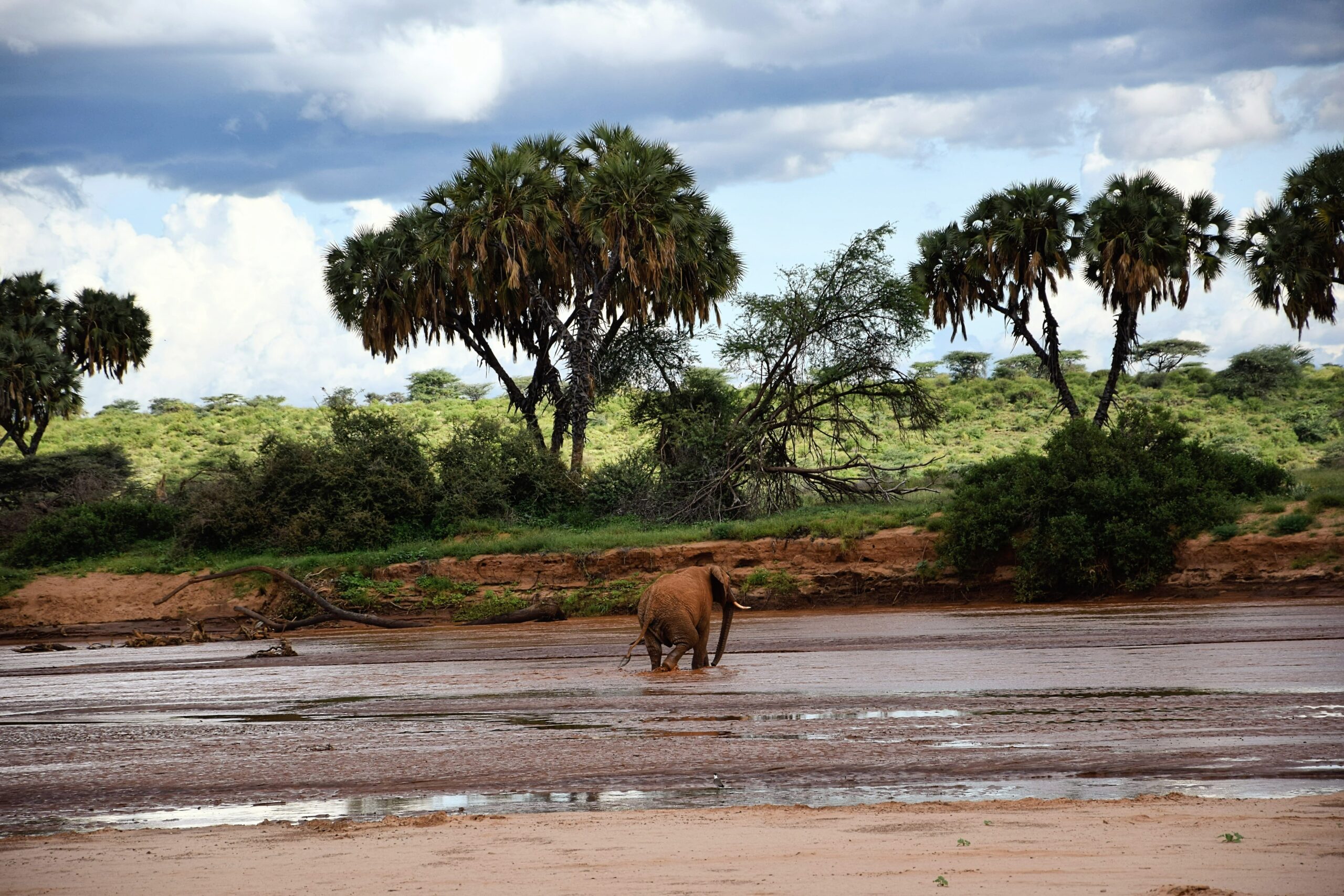
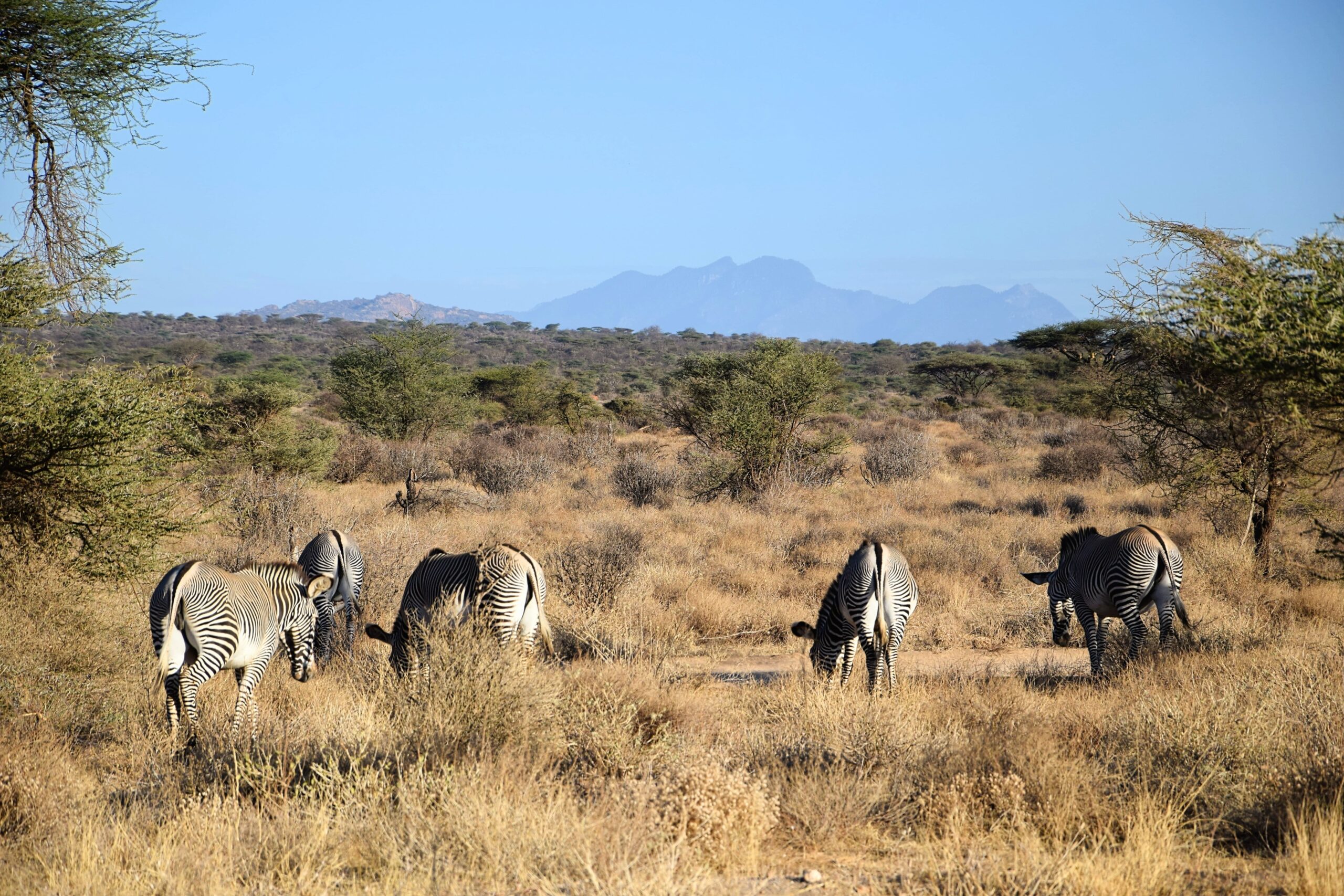
Elephants gather along the water. Lions, leopards and cheetahs live here too, along with buffalo and birdlife that keeps binoculars busy. The headline species are the Special Five: Grevy’s zebra, reticulated giraffe, Beisa oryx, Somali ostrich and gerenuk. We cover each one in our guide to the Samburu Special Five.
How a Samburu trip is built
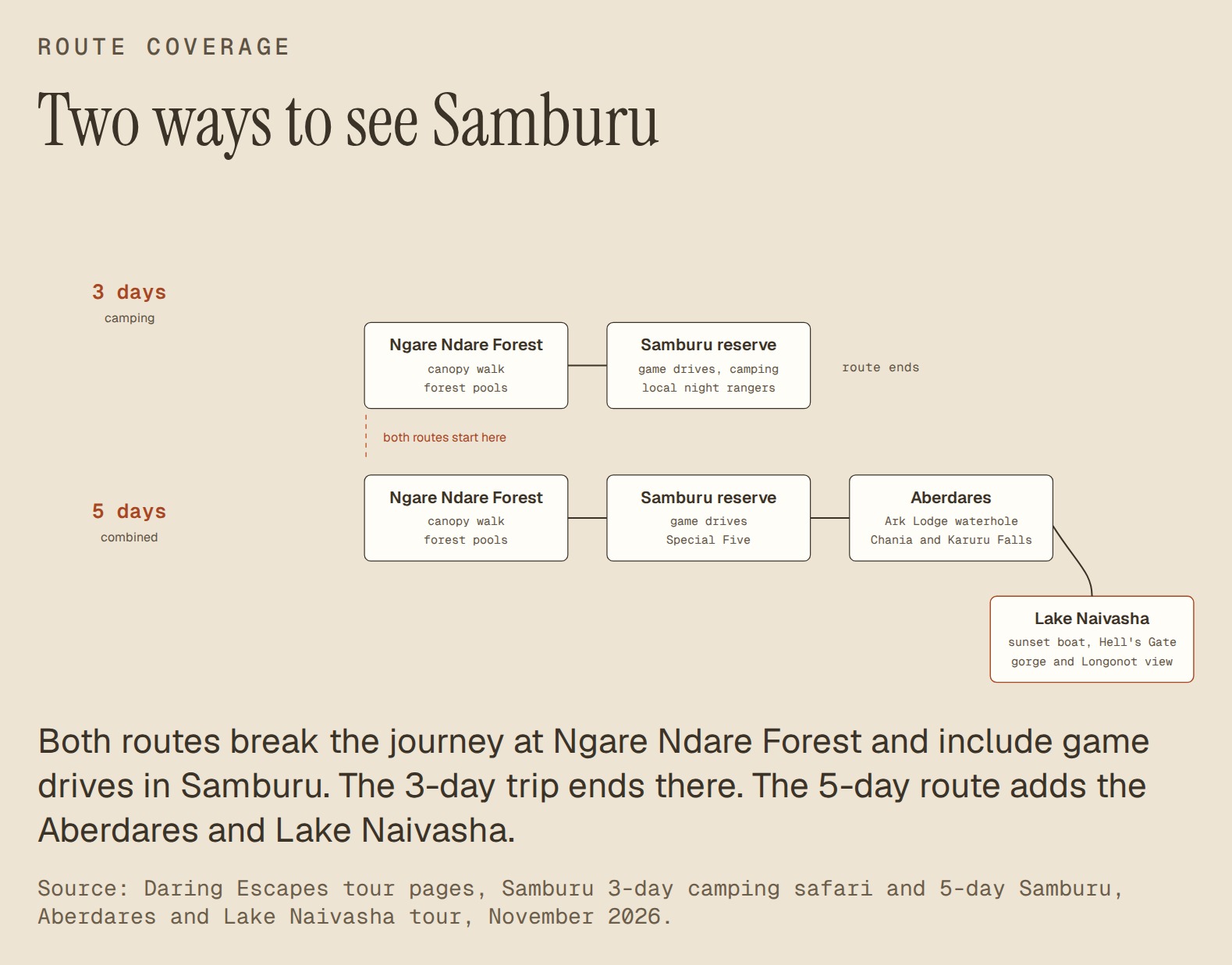
The focused option is our 3-day Samburu camping safari. You camp under canvas in Ngare Ndare Forest, where a canopy walkway runs through the trees and small waterfalls drop into forest pools. From there you move inside the reserve for game drives, camping in Samburu with local night rangers watching over camp.
If you would rather cover more of central Kenya in one trip, the 5-day route through Samburu, the Aberdares and Lake Naivasha starts the same way at Ngare Ndare. In the Aberdares you watch for wildlife at The Ark Lodge waterhole, then visit Chania Falls and Karuru Falls. The trip ends at Lake Naivasha with a sunset boat ride among hippos, pelicans and fish eagles, a day in Hell’s Gate by bicycle or on a game drive, a walk into Ol Njorowa Gorge and a view toward Mount Longonot.
To compare wildlife watching across the rest of the country, start with our guide to Kenya wildlife beyond the best-known parks.
Questions to ask before you book
- What does the price cover? Ask for the full list in writing: reserve fees, camping equipment and guiding.
- Who guides you and how were they vetted?
- What happens when plans change mid-trip? Ask about backup vehicles, backup guides and who you can call.
Samburu FAQ
How many days do I need for Samburu?
Three days covers the reserve together with Ngare Ndare Forest. If you want the Aberdares and Lake Naivasha in the same trip, take the 5-day route.
How do I get to Samburu?
It is a long drive north of Nairobi. Both of our routes break the journey at Ngare Ndare Forest, so you stretch your legs on the canopy walk before continuing into the reserve.
Not sure whether the 3-day camping safari or the 5-day combined route fits your dates? Get in touch and we will help you pick.
Plan your trip
Ready to plan your Kenya trip?
We plan every Kenya trip from scratch, with honest pricing.